


Conflict, security and peace

Markus Holdo, author of 'The Responsibility to Disrupt', argues that AI’s threat to democracy is its intolerance of thinking and questioning.…Read more
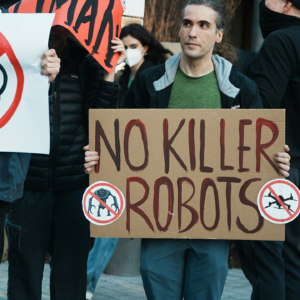
Luke Moffett, author of 'Algorithms of War', discusses how the growing use of AI on the battlefield is reshaping the way life-and-death decisions are made, risking dehumanising civilians by reducing them to data points.…Read more

Aaron Martin, author of 'The Trust Gap', argues that the perceived "crisis of trust" is overstated: while public trust in politicians is often low, survey data shows that many people continue to have confidence in institutions such as universities, the courts, the police, and scientific experts.…Read more

Lee Gregory suggests that the next Labour leader should reject the false choice between welfare and defence by arguing that reducing poverty is an essential investment in national security, economic strength, and long-term prosperity.…Read more

Higher education must take a stand on Gaza and academic freedom: The silence of Swedish universities
These authors argue that universities must actively defend academic freedom and human rights, especially in response to the destruction of Palestinian education, because silence risks complicity and undermines their democratic role.…Read more

Oz Hassan, author of 'Why the European Union Failed in Afghanistan', argues that despite rapid military success using advanced technology, the 2026 Iran strikes demonstrate that destroying targets does not translate into political victory, instead strengthening adversaries, undermining alliances, and exposing the limits of US global power.…Read more

George Miller discusses the What Is It For? book series, inspired by Gauguin’s existential questions, arguing that in an age of global “polycrisis,” critically examining the purpose of institutions can help us imagine better alternatives, even if it cannot solve problems outright.…Read more

Emmy Eklundh, author of 'Europe’s Populist Condition', suggests that mainstream European parties are increasingly adopting populist-right policies, showing the divide between “mainstream” and “populist” politics is largely illusory.…Read more

Tara Lai Quinlan, author of 'Police Diversity', discusses how ICE’s aggressive raids in Minneapolis reflect a harmful “warrior” policing culture that damages community trust.…Read more

In this podcast, Richard Kemp speaks with Bahar Baser and Élise Féron about how the 'Journal of Disappearance Studies' serves as a space to break these boundaries and give this important field a unified platform.…Read more