


Global social challenges
There are multiple interlocking crises currently gripping the planet. Significant threats and dangers lie ahead of us, but so do opportunities, as new ways of being, thinking, and doing emerge.
This stream of Transforming Society is a space for exploring the complexities of the global social challenges across disciplines and fields. It seeks to build and share the knowledge needed to shape a fairer world, across and for the global south and north, hoping to foster dialogue between academics, practitioners, policy makers and the wider public.

Can we create a world where food banks are in the past and everyone can afford the essentials? In this discussion with Jess Miles, Heather Buckingham explains the importance of believing that everyone matters and making sure that everyone can live a healthy life without shame or stigma.…Read more
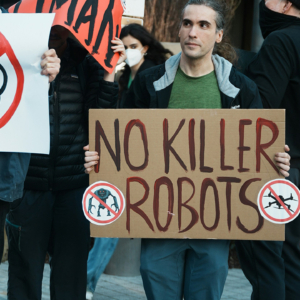
Luke Moffett, author of 'Algorithms of War', discusses how the growing use of AI on the battlefield is reshaping the way life-and-death decisions are made, risking dehumanising civilians by reducing them to data points.…Read more

In this episode of the podcast, George Miller speaks to Philip Roscoe about why a shopping trolley is more interesting than it at first appears, how markets of all sorts come to seem natural and inevitable, and what happens when we start to see them as things that people make – and can therefore remake.…Read more

As she retires after 36 years, Alison Shaw reflects on building Policy Press and Bristol University Press, arguing that values-driven publishing, evidence and open access can help create a fairer society.…Read more

Will Snell, author of 'The Fair Necessities', examines how extreme wealth, exemplified by a trillion-dollar fortune, is rapidly widening inequality, with largely unearned and extractive wealth growth that harms economic growth, social mobility, democracy, and the environment.…Read more
Sy Taffel, author of 'Postgrowth Digital Futures', argues that digital technology should prioritise sustainability, community wellbeing, and democratic control instead of endless capitalist growth.…Read more

Higher education must take a stand on Gaza and academic freedom: The silence of Swedish universities
These authors argue that universities must actively defend academic freedom and human rights, especially in response to the destruction of Palestinian education, because silence risks complicity and undermines their democratic role.…Read more

In this episode of the podcast, George Miller speaks to Madeleine Sumption, author of 'What is Immigration Policy for?'. They discuss why there is no single ‘right’ level of immigration, how the same evidence can lead to such different conclusions, and why attempts to control migration numbers so often fail.…Read more

Marc Thompson, author of 'Spark', argues that the toxic algal blooms in Lough Neagh expose a wider ecological crisis driven by flawed economic systems and poor water management, highlighting the urgent need for a “planetary mindset” and more cooperative ways of organising society within environmental limits.…Read more
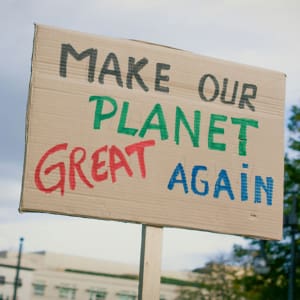
Frank T. Manheim, author of 'American Environmental History and Policy', argues that Trump’s withdrawal from the Paris Agreement reflects a long-building political polarisation over environmental policy in the US, rooted in conflicts in the 1970s, and that future climate progress depends on overcoming this divide.…Read more