


True crime is a huge cultural industry, yet behind its stories lies real victims and uncomfortable ethical implications.
In this podcast, Richard Kemp speaks with Ian Cummins and Martin King, two of the authors of True Crime: Key Themes and Perspectives, about the impact true crime has on society.
They discuss Serial, the groundbreaking podcast, and how it sparked the industry anew, the media’s reaction to the Lucy Letby case, and the wider issue of using crime stories to push sales and clicks.
Available to listen here, or on your favourite podcast platform:



Ian Cummins is Senior Lecturer in the School of Health and Society at the University of Salford. Martin King is an independent scholar and author.
Scroll down for shownotes and transcript.
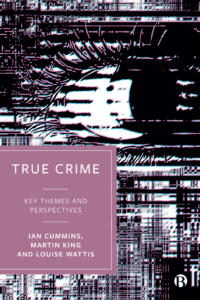 True Crime by Ian Cummins, Martin King and Louise Wattis is available for £27.99 on the Bristol University Press website.
Bristol University Press/Policy Press newsletter subscribers receive a 25% discount – sign up here.
Follow Transforming Society so we can let you know when new articles publish.
The views and opinions expressed on this blog site are solely those of the original blog post authors and other contributors. These views and opinions do not necessarily represent those of the Policy Press and/or any/all contributors to this site.
Image credit: Zanyar Ibrahim on Unsplash
SHOWNOTES
Timestamps:
00:01:55 – Why does true crime fascinate us?
00:08:27 – What is the importance of ‘In Cold Blood’ by Truman Capote?
00:11:14 – What effects does the interplay between fact and fiction in true crime have?
00:19:10 – What is the relationship between the Central Park Five and true crime media?
00:28:25 – What does the reverence of famous serial killers tell us about our culture’s values?
00:42:59 – What ethical issues do podcasts like Serial have?
00:53:34 – What do cases like Sutcliffe tell us about our collective attitude towards violence against women?
00:57:31 – What does the media coverage of the Lucy Letby case tell us about our media landscape?
01:08:33 – Does our celebritisation of criminals pose issues, and how could we change things going forward?
Transcript:
(Please note this transcript is autogenerated and may have minor inaccuracies.)
Richard Kemp: You’re listening to the Transforming Society podcast. I’m Richard Kemp, and on this episode I’m joined by Ian Cummins, senior lecturer in the School of Health and Society at the University of Salford, and Martin King, an independent scholar and author. Ian and Martin’s new book, ‘True Crime: Key Themes and Perspectives’, co-written with Louise Wattis and published by Bristol University Press, analyzes in depth the phenomenon of true crime.
From Lucy Letby to Fred and Rose West, all the way back to Jack the Ripper, chances are you’re familiar with at least one famed serial killer. And true crime is big business, documentaries, dramatisations, books, and now one of its most popular ever formats the podcast. As of 2024, in the USA, an estimated 190 million people over the age of 13 listen to true crime podcasts. That’s according to Edison Research. It makes True Crime the third most listened to genre in podcasting, at least in the USA. The story in the UK is very similar. In their new book, Ian, Martin and Louise break down the big stories in true crime, revealing the genre’s social and cultural impacts, and also considering its ethical implications and wider influence on crime and punishment.
Ian Cummins and Martin King, welcome to the Transforming Society podcast.
Ian Cummins: Thank you. Thank you.
RK: I don’t consider myself to be a true crime fan per se. Not that I don’t watch and listen and things like that, but but, but I’m very aware that, like, it’s a, it’s a fanatical genre that a lot of people really, really love. And while I may not be that kind of a person, I’m very aware of a lot of these a lot of these, criminals that you, you talk about in your book.
And so just like taking an academic lens to, to something that I’m sure all of us are so, so kind of aware of, whether it’s in a big way or in a small way I was just really excited to read your book. And now to talk to you guys about it today. Martin, can I ask you first? So, so we have books, documentaries, dramatisations, podcasts.
Why does true crime fascinate us so very much? And where did this fascination first come from?
Martin King: I suppose it starts with like an obsession with death in some ways, and then if you extrapolate from that, then true crime is often about sudden death, violent death, unexpected death. It’s a kind of morbid fascination with it that goes back a long way. I mean, you mentioned Jack the Ripper, but before that, if you think about, public executions, public hangings, etc., etc., which was seen as a kind of a day out for the family in the 19th century.
So it goes a long way back, you know, if you, Tale of Two Cities that we all read at school, Madame Defarge and the guillotine and all that sort of thing. So there’s this, this long history, I suppose, of a of an obsession with it. True crime, I suppose, as a genre is about a kind of fictionalisation of of the facts, really, and a dramatisation of things that are based loosely on real crimes.
So obviously you’ve got a whole load of programs, documentaries, podcasts about actual cases. But if you think about popular programs like, you know, the US series Law and Order, which has been running for a long, long time, very, very popular. And it’s all its variations, really. They are based loosely on real cases as well. And so, I mean, we’ve written previous to this, I suppose we’ve written a lot of stuff about police procedurals and why people like, you know, crime programs per se.
And one of the things I think about that is that it’s, they’re kind of comforting in a way, in that it, you know, they they usually solve the crime. Police procedurals often last an hour, things like Law and Order and at the end, you know, the bad guys always get away, mainly the occasional twist of the plot, etc., etc., etc..
And, and certainly with some of these programs, serial killers, you know, are quite useful in those weekly programs in that you can have a whole series of people tracking, you know, one particular serial killer etc.
IC: So as you were saying at the beginning, Rich, it’s almost impossible to escape. And that’s something we found when writing about true crime. You can’t really escape it, in a good way and a bad way in that crime dominates the media. You can see this week, you know, release of prisoners and so on. Obviously, that’s not necessarily a true crime, but it shows the power of media interest.
And the thing about true crime is that, well one of the things is that, there’s an endless supply of stories going back from, from wherever you want to really. I mean, you know, real and, then based on real. So, you know, if you looked at TV detectives, you’ve had everything from, a monk as a TV detective in Cadfael to, for older listeners Eddie Shoestring the radio DJ who wore pajamas, who was a detective.
So it kind of crime, gets into everywhere. And true crime particularly there’s been an explosion, I think, with podcasting, because it’s podcasting and true crime is a meeting of, you know, form and genre that is just ideal because it’s, you know, people can access podcasts when and where they want. They can then follow through a story. They may know the story, but often podcasts are, because the news 24 hour news picks up a story, drops it, podcast often claim one of their claims to authenticity is that this is a deep dive. This is a you know, we’re going to look at the real facts. You may have seen this on the news that so-and-so has been convicted of these offenses we’re gonna go past the headlines and look at it in depth. And then again, of course, it’s it’s it’s a market, isn’t it?
It’s, huge resources, as you say, the numbers of listeners, if you took true crime off Netflix or other streaming services, there probably wouldn’t be that much on them, to be honest. So I think all those things and people are fascinated by these issues, why do people commit these crimes? So I think one of the aspects of true crime recently is this kind of a rise of psychological profilers and explanations for the individuals concentrated on these things to give you some understanding of why people have committed these horrendous crimes, often those well, almost without exception, those individuals making those comments have not actually assessed in a professional way or had any contact with the people that committed those crime. But it provides a sense of meaning, I think, to people. And, there’s a kind of narrative structure there, this explains, this explains these horrendous events. So this kind of psycho biography of convicted killers is huge business.
MK: Quite often it doesn’t explain them at all, though does it? You know, but that’s that’s the claim when they say we’re going to have a deep dive. Deep dive is doing a lot of heavy lifting a lot of the time. It’s you know tinkering around the edges or, like you say, trying to apply psychological theory and come up with the answer. We’ve had some contact with the author, David Peace, in the past, and one of his things is, you know why, why are people so obsessed with this question of why in that place at that time? And it’s a question that quite often can’t be answered. But a lot of these programs would claim to be, you know, giving you the answer to that question.
IC: But a high profile crime is often presented as telling you something about society at that period, which it may do, it may not. But some of those claims are made. So if you look at a high a very high profile crime, like the murder of Jamie Bulger in the early 90s, you look at the commentary around that crime, it’s it’s seen as, you know, telling you something about children in the 1990s as, you know, as though the perpetrators of that appalling crime are representative in some way of ten year olds in Britain at that period.
Well, obviously they weren’t. And one of the most difficult things, I think, is that, as Martin was saying about the answers is sometimes there aren’t answers and that and itself, or the answer may be that something that’s even more unpalatable, you know, the idea that somebody committed a violent offense and, they did that because for their own gratification or sexual gratification is actually quite an appalling thought.
But that’s a very difficult thing to take on board. It’s easier to say, you know, this person is evil.
RK: Earlier in your book, you in the early pages of your book, you talk about Truman Capote’s ‘In Cold Blood’ as kind of like a seminal, kind of like a culture shifting text. Can you talk about like the the importance, like what? What was this book and what was its importance?
IC: Well, Capote’s saw a report of a murder in a three line report in The New York Times of a murder in Kansas in 1959. And he then went and researched in his, claims as he went and spent time in that area. Research wrote about the the background to the crime. In fact met the two people who were later executed for the crime.
So Capote became, and ‘In Cold Blood’, became a sensation, made Capote his fortune and so on. But it’s a seminal work because of, first of all, it’s a literary figure. Capote was already, extremely well known American novelist. So it’s a literary figure engaging with crime in a way in which crime had been seen as pulp fiction, sort of not given artistic status, that perhaps it should have been. So Capote his, brings that to the the work, but also Capote in a sense led a new version, a new version of true crime, in that he was approaching making claims that he was writing the real story.
But when you go back and look at ‘In Cold Blood’, it’s kind of, is it a novel? Is it is it fiction? Is it something between the two which Capote claimed? So he was making claims for authenticity, but actually invented some of the scenes. And there’s been hard, it’s been criticised at the time for some of the inventions.
But one of the major things about that work is that Capote is the central character in the work. So it’s about, it’s not about him, but it’s about his center, it’s a kind of example of that gonzo journalism putting himself at the center of the story, and writing around his views and so on. So in that way, that’s become something of a template for, true crime, I think, in later forms.
So if you look at the podcast again, you can see that the, the podcasters are putting themselves in the center of the story, and their reactions are important, as well as to the facts.
MK: Yeah. And that’s true of a lot of I mean, in the book, we probably get to Lucy Letby later, but in the book with the chapter on the Letby case and certainly the, you know, the Panorama documentaries around that, but very much about the journalists placing themselves very excitedly at the center of the story. So in that sense, I think, you know, Capote’s work is is kind of a template for what’s come afterwards. Really.
RK: You, you talked, talked earlier about authenticity. In your book you say that true crime makes claims for authenticity and validity, but that it also plays with fact and fiction for dramatic purposes. What effects does this interplay have on the public and also on, on policymakers and both of their perceptions of crime?
IC: I think the the first thing is the these presentations, if you like, they are saying that this is the true story. So any claim to authenticity has to be treated with some caution, I think, because clearly you cannot get all the details of a very complicated trial, for example, into a even to an hour documentary or, you know, a series of documentaries.
The Letby Trial that Martin mentioned that lasted over a year, I think, so the level of detail and so on that’s involved in that case is just impossible for the general public, including ourselves to keep up with almost. So the thing about these representations, be they drama, be they Channel Four kind of gritty police procedurals or fly on the wall documentaries, they’re all a narrative construct.
They’re all, because it would be impossible to follow an investigation. So if you follow the police investigation for 24 hours, most of it would be, having interviewed police officers about this sort of work, most of it would be really tedious because these people, you know, increasingly now looking at CCTV, etc., etc.. So the case, the investigation, the way that that’s presented is constructed in a particular way.
And then that affects the way in which people view the operation of the criminal justice system. So the criminal justice system is a really important area of public and policy, but actually very few people have that much contact with it or direct contact with it. So, I have well, I was a probation officer, so I had quite a lot of contact with it, but, you know, how many people have actually been in a prison, visited somebody in a prison, been on a jury, those kinds of things?
So the workings of the criminal justice system are hidden from us. Not necessarily deliberately on a practical level, but then they become very high profile stories. So this week’s release, mistaken release of prisoners is a fantastic example of the way in which something that’s happened actually happens quite a lot, it seems, suddenly becomes a huge story.
And we’re aware of this. Whereas people have been released from prison mistakenly at various points. Well, it seems every day from the media reporting, but that’s not been reported every day. So I think our views of these, it’s really important. Crime and prison’s really important area of public policy. And it’s a, you know, people’s view of the effectiveness of the criminal justice system, sentencing and so on.
All those can be influenced by high profile cases, which are the ones that true crimes concentrate on.
MK: And I think the, you know, public opinion is kind of shaped by, you know, we talk a lot in the book about the relationship between the mass media and, and the, you know, criminal justice system and the representation of true crime, I suppose. And as Ian said, a lot of it is, is a kind of a narrative construct of a story without looking at the complexity.
And yet people’s opinions are, you know, formed by watching these things, I would say. And then, you know, then they think they know what needs to be done with the criminal justice system, you know, the failings of, etc., etc., etc. but it’s kind of dangerous in some ways, I think, because, you know, as Ian said it tries to simplify something that’s actually quite, quite complex.
But certainly people, you know, certain cases, you know, get right into the public imagination and everybody’s got an opinion about them and what’s gone wrong and what should be done in the future, etc., etc., etc..
Does the, seeing true crime documentaries, podcasts, books, etc. is like, you’re saying the criminal justice system is a vast and complex thing, which makes perfect sense. And yet these true crime programs are so, so fascinating. We can just like, oh, six episodes to really get into the details of what really happened, because we’re not actually being told. Does that, that mindset, does that kind of reflect or have an or have an effect on?
RK: It just makes me think of like politics, for example, and like how how often like going home and chatting to family and everyone tells me how much they’re being lied to by their by their political leaders. I just I wonder, is there a connection between these two things?
IC: I think there’s something there about the way in which particularly, populist politicians are always appealing to the general public over the heads of, you know, liberal elites like me as a probation officer or civil servants and so on who are making these decisions. They make decisions in the Home Office or whatever it would be as though there is, a kind of liberal, Dominic Cummings might say, criminal justice blob against, you know, against increased punishments and so on and so forth.
Whereas actually in England and Wales, the prison populations grown by about 20,000 in the past 15 years, which most people wouldn’t know. They would think that prisons, you know, well, I don’t know, not speaking on people’s behalf, but the perceptions of prisons are very much, well, you know, they’re they’re not tough enough.
They’re not this they’re not that. Whereas actually, you look at the reports from Her Majesty’s Inspectorate of Prisons and so on, so forth, that puts a picture of a failing regime of, you know, overcrowded prisons, poorly paid, difficult to recruit staff, drugs, violence and so on. So, for example, there’s been in a maximum security prison,
Wakefield, there’ve been two murders in the past month.
RK: In the prison?
IC: In the prison, yeah. So that it’s not going to, it’s not going to be presented headlines in those ways. But, actually, well.
MK: This is right back to the beginning, really. The question about why people are fascinated by true crime, you know, because, you know, crime and punishment or being seemed to be tough on crime. It’s been like a central issue for political parties for, you know, well I say the past 50 years. Well, it’s probably longer than that. But it’s certainly something that, you know.
IC: In fact, I’ve written a book for Policy Press about that.
RK: Thank you very much.
IC: Get that one in, but it’s true. And there’s almost we don’t you know, prisons, well a particular view that prisons fail, but the failure of prisons seems to lead to the demands for more prisons. Which is not true of any other institution. And we don’t have a debate about, you know, actually, we spend a lot of money on incarcerating people.
What is the value of that? You know, what, us taxpayers, etc., etc.. What value are we getting out of that? So, so I mean, in terms of true crime’s influence, I think there are well, the developments in true crime is that there are a series of podcasts and cases that are more critical of the institutions of the criminal justice system and the way that they fail victims, particular groups of victims with, victims of sexual violence and domestic violence and so on.
So there’s a critical format coming out there that’s taking actually perhaps a more a different kind of perspective on these issues.
RK: Hi. This is Richard Kemp from the Transforming Society podcast. Thanks so much for listening to this episode. If you’d like to buy a copy of ‘True Crime’ by Ian Cummins, Martin King and Louise Wattis, we have a 50% discount code for the paperback and e-book versions valid until the 31st of December 2025. Just go to bristoluniversitypress.co.uk, search for true crime, select either the paperback or e-book version, and enter TC50 at checkout. That’s TC50 at checkout. Now back to the episode.
Can you tell us about the Central Park Five and what part did true crime media play in their convictions.
IC: In the book one of the things that we wanted to look at was the influence of true crime on, you know, penal policy and as I said before, one of the things that’s big biggest social policy you see there in that area of penal policy is the increase in the use of imprisonment. The Central Park Five, we use that as an example because in the case in 1989, a jogger called Trisha Meili, who wrote a memoir some years later about her experience of this case, she was attacked, raped, brutally assaulted, and left for dead in Central Park.
Trisha Meili was an investment banker, which is relevant in the case in that the way it’s portrayed in the media, she was a white wealthy woman, five young black and Latina American New Yorkers were arrested and convicted of a crime. They were 15, 15 or 16 years old and they Kevin Richardson, Raymond Santana, Antron McCray, Yusef Salaam and Korey Wise.
So they were convicted of the crime and the media reporting of the case at the time, in the late 80s, early 90s New York, there’s high crime rates, violent crime. It was a kind of this became a symbol of the breakdown, if you like, of that kind of urban society. And it played on a series of fears about urban crime, about race, about class.
And so the at the time the case was seen to be, you know, was used as a symbol. The media used a series of racist tropes to report this gang of young black lads running wild, etc., etc., and a New York property developer called Donald Trump took out.
RK: I think I’ve heard of him.
IC: Well, well, the interesting thing about this story, it comes back later. He took out an advert in the New York Post, I think it was, saying that the the boys should be executed. This was before they’d been convicted. So this case become was a symbol of all these issues around urban violence, urban crime. And of course, it cut across, it’s a sex crime which gets higher coverage. It cuts across race and class because the perpetrators was at the time the media were saying these were a group of young black lads, young black and hispanic lads, and they’d been a group of in the park that evening. There’d been about a group of 30 or 40 young black lads.
So it’s this sort of fear, deep racist fear of black male. So those issues were key in the kind of climate of conviction. So one of the things about true crime, and also any wrongful convictions, if you look at the period of the time, you know, the media, the pressure on the police, pressure and so to find the culprit, etc. can lead to wrongful convictions or is a factor in them.
So the media influence in whipping up the hysteria around the crime is a factor then. Then in 1991, so soon after the conviction, Joan Didion wrote an article in the New York Review of Books about the case and about how it reflected the schisms in American society, about the racist tropes that were used. And she, raised doubts about the convictions, particularly the reliance on confession evidence.
So then, as it turns out, ten years later, in about 2002 I think, the Central Park Five were served their sentences. But a convicted rapist and murderer, Matias Reyes, confessed to committing the offense in Central Park and the convictions of the Central Park Five were overturned and they were, I think technically it’s called vacated. And they, they settled with the city of New York for wrongful convictions and won a multi million dollar settlement, so that then, following that chain of events, Ken Burns, the legendary American documentary maker, made a film about the Central Park five after the convictions had been overturned.
You know, using it as a case study if you like, in the racism in the criminal justice system. In the 2016 election, Trump said that the Central Park Five were guilty. That New York, in effect his, I think he actually used the term he said that New York City had been scammed. They shouldn’t have agreed the settlement.
So the case came back. So this politics of law and order, Trump was like, you know, as Martin was saying, you know, very, very strong on we must crack down on crime. Obviously not the ones he committed, but he was using this as, you know, this is we need to this is an example. And clearly it’s a racist dog whistle to use that example.
And after that, the, Oscar winning documentary maker, Ava DuVernay, made a film, a docu drama called ‘When They See Us’, which is about the case of the Central Park Five. But that was focusing on this wrongful conviction as an example of the injustices and the racial injustice in the American criminal justice system.
So this was aired around the times of Black Lives Matter. So it became, in a way, the case then became a symbol of these injustices. Sometime, you know, almost where are we 30 years, 25 years after the case. So it’s a fascinating example of the way in which attitudes to crime, attitudes to a case can be influence policy because they’re part of, you know, an increase in when they were convicted in that period, the America there was a huge expansion in the American prison system.
America now has over 2 million people in prison. A, you know, overrepresentation of young black men within those systems. That was part of a policy there of the war on drugs and all those sorts of things that trigger mass incarceration as it’s called. But then the case comes back, comes back into the public domain, as it were, or wider public domain, because ‘When They See Us’ is on Netflix and, you know, it’s a huge success dramatically and the case then becomes something different or the reaction to it.
So it’s an interesting case study in the way that these views can move over time.
MK: And that the case represents the case represents different has been used by different people for different things I suppose like you say, you know, it kind of came back again around Black Lives Matter and and all that sort of stuff.
IC: And it’s and DuVernay had produced a documentary called 13th which is about the expansion of, yeah, the expansion of mass imprisonment. It’s called 13th because the 13th amendment abolished slavery. Apart from cases where people are criminals. So that documentary is a history of the racist portrayal of black criminality in effect, but that’s going to reach a much what the other say about these things, a Netflix documentary is going to reach a much broader audience than a Joan, much as we love Joan Didion, which, you know, her article in the New York Review of Books is not going to reach that kind of audience.
Same with academic work. And in fact, when she produced 13th, a New York socialite who I can’t remember her name, donated millions of dollars to community groups to fight mass incarceration on the basis of having seen that film.
RK: Incredible. Just that that one alone is a microcosm of the the power of true crime media.
IC: Yeah. And it’s also it reflects the way in which attitudes change. People have different approaches to crime, the influence of that crime. And I guess it also shows, you know, that filmmaker would not have been able to make that film, would not have had access to make those sorts of films in the 1990s, early 1990s.
So there’s all sorts of things that make that a way of looking at punishment. So and finally, that, ‘When They See Us’ became very influential, in making the expansion of the American prison system become an issue of civil rights, which is a very interesting way in which that has developed. So and in, in, in the film, in ‘When They See Us’, they have a clip of Trump’s newspaper post and one of the mothers of the Central Park Five says, you know, makes a really disparaging, I can’t remember exactly what she says, but we all know that she’s they’re talking about Trump, the president.
So it’s a kind of a, it’s a interplay between the two is very good. It’s fantastic, but harrowing film.
RK: You have your Ted Bundy’s, your Jeffrey Dahmer’s, your Zodiac killers all the way back to Jack the Ripper, as I was saying, at the top of the show today, very famous people who also happen to be murderers. Jack the Ripper himself, he even has a London tour dedicated to him. These people commit such heinous crimes, and they end up becoming quasi celebrities.
What does the reverence of these famous names and others tell us about the values within our culture?
MK: Yeah, there’s more than one. There’s more than one Jack the Ripper tour, competing Jack the Ripper tours.
IC: Isn’t it the third most popular tourist attraction in London? They can play it around validity because they all try and at the end tell you who’s done it.
MK: Oh that’s right. Yeah, yeah, yeah.
IC: Yeah, like people say yeah. And it’s this idea you’re being, you know, you’ve been taken on the tour of the East End, which I don’t know about you, but it’s changed a bit since 1885, really.
MK: So but anyway, yeah. What’s it say about our values? I mean, it’s tied in really I think for me with the kind of history of our relationship with celebrity and kind of focus on the UK, I suppose, but you know, in the 40s and 50s, I think the celebrities that people, you know, in admiration of were probably like Hollywood film stars, etcetera, etcetera, etcetera.
That’s what celebrity was. And then we kind of developed our own homegrown talent and, and, you know, there was a great Channel Four documentary on years ago called The Showbiz Set, which showed how the kind of British celebrity kind of emerged in the 50s and 1960s. And then you’ve got this whole idea of democratisation in the 60s, real or not.
But certainly the myth of the 60s is where, you know, kings and princes rubbed shoulders with the ordinary man in the street, and people like Michael Caine became famous from working class roots, et cetera, etc., etc. and the Beatles are highly influential in that, I have written a book about the Beatles, if anyone wants to look it up, but which focuses on their celebrity and the influence of their celebrity, particularly on masculinity.
But that’s another thing. But within that, I think you get, then the emergence and I think certainly in the book we wrote on the the cultural legacy of the Moors murders, Ian and I, and another colleague, you know, the Brady and Hindley, who certainly fit into that kind of celebrity category.
RK: That’s Myra Hindley…
MK: And Ian Brady.
RK: Ian Brady, thank you.
MK: Yeah, the Moors murderers so called. But the nicknames are important as well. And we’ll come back to that because you know the list you reeled off that a lot of them have nicknames given to them by the media. But the photographs of Brady and Hindley that were taken on their arrest, are as famous images of the 60s, as you know, the Beatles waving from aircraft steps, or JFK, etcetera, etcetera.
And David Bailey did something called ‘Box of Pin Ups,’ David Bailey photographer, where he photographed what he thought were the key players in swinging London in 1965. One of those photographs is of the Kray twins, and they had a really interesting, you know, they fit this whole idea about the way that people, notorious people, become famous and kind of glamorised, really.
There have been two films about the Krays, one starring the Kemp brothers from Spandau Ballet and the more recent one with Tom Hardy playing both parts. Legend. It’s about 2016, I think, but that particularly focuses on the whole glamor aspect of the Krays, you know, the Krays lives and then their moving about in Swinging London, etc., etc..
So there are these people that become celebrities and I kind of, you know, despite the fact that they do terrible things, not in the, not in the case of Brady and Hindley, but certainly the Krays, are seen with a certain sort of, you know, EastEnders type affection, I think. And it’s part of the explanation I think about, you know, the celebrification of these people is that people, you know, a lot of the academic stuff that we’ve, that we’ve read about it is about, you know, people transgressing, transgressing societal boundaries and us being kind of in awe of that in a way, that people dare to do the things that that we wouldn’t do, that we wouldn’t dare to do. And in the case of Ian Brady, he was very, very explicit about this in the, you know, society’s rules, you know, did not apply to him basically, and therefore, you know, he went ahead and did the the dreadful things that he did in terms of abducting, torturing, murdering children.
But I don’t know what you think Ian, have you got anything to add to that?
IC: Well, I think the also the with celebrity, with their notoriety comes celebrity in a sense and then I think you also see there’s particularly this character of the serial killer which comes into being in the 80s really. So that’s linked to, you know, the FBI developing this notion of what a serial killer is and, etc., etc.. The definition of a serial killer. That links to the media, that links to the media, there’s a kind of symbiotic relationship between the media, the criminal crime, and then these tellings of these stories.
MK: Yeah, and serial killing in particular, I think as well.
IC: Yeah, yeah. Because that’s even though people say we’re interested in, you know, there’s a focus on violence. It’s a particular sort of violence. There’s there’s not, there’s certainly at this period there’s not a huge interest in domestic violence. You know, there’s not, an interest in, you know, the causal roots of this in the media way it’s portrayed.
Certainly. There’s obviously there’s feminist groups and, campaigning on these issues. But what I’m talking about here is this high profile, I think in the book there’s a there’s a quote that nobody ever got famous by beating somebody to death in a back alley. You know, it’s that kind of somehow these people become famous. But even within that, there is a hierarchy almost of, you know, people who were so Brady would be seen, as you know, was always in the media, even after his death, even, you know, there would be a there’s been a huge number of stories, whereas Kenneth Erskine, who is a man who murdered pensioners in Stockwell in London in the 90s, doesn’t really appear in criminological literature. Now, does that tell us something about him, his crimes, the status of his victims? I think all those things. But celebrity then becomes, it feeds off itself, doesn’t it? And, you know, people could be in a way we’re part of that. We can’t we have to accept that we’re not going to become famous.
But, you know, we’re contributing to those sorts of, debates and so on and so forth.
MK: Yeah. By writing about this stuff, you know, we’ve written, you know, we’ve written this explicitly somewhere else that we are part of the serial killing industry or, you know, the true crime industry. We’re engaging with it. But also, I think the other thing is then, you know, a lot of the certainly stuff that’s on TV and the rise of the, the expert, if you like, or academic or otherwise, and there are several that pop up on our screens all the time.
They themselves then become a kind of true crime celebrity in, you know, like we were saying before, coming on the TV, explaining these crimes, recreating the crimes of Jack the Ripper, etcetera, etcetera.
IC: So I mean, you have, you have people who, so there was a series where Emilia Fox, the actress, and David Wilson, the psychologist, reinvestigate the crimes of Jack the Ripper. Well, with all due respect to both individuals, they don’t have the skills or, you know, what’re they doing. One of the things about these kind of statuses that there’s just so much if you write a book about true crime, like we’ve done or done events around it, one of the things is that people think you know, think you know about every true crime podcast and every and it would be impossible to keep up with them.
It’s just not laziness on my part, but that’s just fine. It’s almost you just can’t keep up, is my excuse. But there’s a lot of money in it. You know, the people who produce the best rated true crime podcasts are making millions. You know, these sorts of, crime con, events, true crime psychologists and professors.
RK: As in, like, like a coming together, a conference for true crime?
IC: Yeah. It’s like a fan conference.
MK: Yeah, yeah, that’s in the book. Which we’re looking at last night. Wasn’t it like £750 for the whole weekend or something?
IC: Something like that yeah. You can go on a cruise, Rich. You could go on a true crime cruise.
RK: Crime cruise.
MK: True crime cruise.
IC: So, sell out tours from leading authors. And, you know, obviously if you’re a top rated TV show, you’re going to make money, aren’t you.
MK: Yeah, or people touring theaters, talking about, you know, couples who kill is one example.
IC: And that’s that’s the kind of, an ecosystem, isn’t it, that’s related to. And they’re not, obviously, they’re not dependent. But the chapter in the book about the Lucy Letby case shows the way in which that becomes kind of a media obsession. Obsession is the wrong word. But, you know, that’s the way in which the media system develops around that.
Now, we’re not saying at all that there shouldn’t be an interest. Obviously, it’s a hugely important case for all sorts of. But actually then thinking about how it’s presented, how the information, how people get that, what how they develop their views. And this goes back to the ethics, the ethical issues that are raised by, you know, some of the things that we’ve looked at, like the podcast Serial which investigate, you know, looked at the case of Adnan Syed that was re in effect, reinvestigating the case. Now there can be, there can be positive outcomes to this and that people are, you know, wrongful convictions are overturned or new evidence turns up, but it creates all sorts of ethical dilemmas about the rules of evidence. The rules of, these don’t apply to podcasts. The police, the police and criminal evidence act, does not have impact on podcasts, as far as I’m aware, you know, are people interfering? Not deliberately, but obstructing a police investigation in some way. If you look at the case of Nicola Bulley, who went missing in Lancashire, that case, the media descended on where she lived and actually got in the way of the police investigation.
And there’s, Lancashire Police. There was a report about how their handling of the media in that, and they’d lost control of the, the media effectively, which was ended up obstructing the investigation. Now those are and that’s an example of a case where Nicola Bulley then her personal life, her family because of social media that just was all over the media.
And, you know, there’s no, I guess once the cat’s out the bag it’s very difficult to manage that sort of situation. So in the case of Serial, which became the most popular true crime podcast, sort of set it off in a way, you know, Hae Min Lee, the young girl who was murdered, her family, their views are not really consulted about making of this program because it’s about Adnan Syed, who had been convicted of a murder, but that the case is about her death.
So the raises these sorts of issues which are very, very difficult to to manage or, you know, how. And so people feel free to comment. In Serial, people are putting in suggestions, questioning people’s alibis and so on in a way which would be done very, obviously, done very differently in a police investigation or in a court scenario.
MK: And it takes us back to the question of, you know why, I mean, why are these things so popular as you say this is, you know, the the most popular podcast and it’s, you know, it links right back to people’s love of being armchair detectives, basically, which is a long history. So, you know, takes it back to people reading Agatha Christie novels and trying to guess whodunit and all that sort of thing.
It’s like people feel like they’re, you know, they’re part of this thing and they’re being given the evidence and they’re going to again, you know, the Letby case is just a fantastic example of the way that it’s kind of polarized people’s opinions due to the fact that they’ve been, you know, fed certain competing narratives.
IC: But the overarching point is that the people who’ve they’ve not been on the jury, we’ve not been on the jury, you know, so I’m not saying about the rights and wrongs of that case, I’m just saying the way in which, yes, so-and-so is definitely guilty. And part of the, I guess, part of the attraction is, as Martin was saying, you’re the I know I used to read a lot of true crime fiction, but I guess the difference is that it was fiction.
So Agatha Christie clearly was fiction and it wasn’t making any claims. Whereas these citizen detective kind of groups do. So it’s not going to, it’s not going to go away. There’s certainly not going to be the podcast, true crime podcast market’s not going to collapse. I don’t think as far as I can see and as I said earlier on, there’s an endless supply of stories.
You know, we can we could find one now, but it’s a bit late to make our fortune. But, you know, you could find a case that we say well actually, look, nobody’s really looked at this. Why don’t we? Whereas they focus on the thing about the serial killer and the celebrity is they focus on a particular type of crime.
They focus on a particular narrative. They tend to ignore or diminish the status of the victims. You know, in the book we write about the Sutcliffe case and the way that was portrayed and you can see at the time the police focused their investigation on someone who was killing, well, it did take, they didn’t link the cases to begin with.
The status of sex workers meant that there was not the level of investigation and so on that would you would was required or the investigation focused on a particular look, somebody who poses a threat to sex workers. Well, you know, they have to take some responsibility. All those kinds of deeply misogynistic attitudes which ignored or meant that Sutcliffe wasn’t apprehended when he could have been much earlier, but also because they didn’t, he didn’t fit the particular type.
RK: So you said, you said a little bit ago about Serial. So serial, yeah, it was, it absolutely exploded in popularity when it came out specifically chapter series one. Probably still one of the most listened to seasons of podcasting that’s ever existed. And yeah, kind of just like, basically jumpstarted an entire industry showing that podcasting and true crime are an absolute match made in heaven.
I was a listener at the at the point when it first came out back in. What was it like 2016? Something like 2015, 2016.
IC: 2015.
RK: And, I was I was I was one of the people who was great. And I said at the beginning, I’m not a true crime fan, or at least I’m not like a fanatic. But that that podcast really grabbed me and, yeah. So so you were saying it looks at Adnan Syed, incarcerated for the murder of his ex-girlfriend and the end result being, and I’m again, just talking from the perspective of a listener like, oh, it was so great to to follow along because I’m hoping the whole way through the way the narrative has been given to us, I’m hoping that this guy who me listening, like, obviously this guy is not not, not guilty. We need to get him out as soon as possible.
Like I was ready to, to campaign along with everybody else. Just like we need to free this man. And so, like, for criminal justice, it’s a great example of the power of true crime media and the good that it can bring, you know, hoping and assuming that the right person does get freed and that’s a result. But like you were talking about the ethical issues in that, and I kind of wanted to hear more about like what the the ethical problems with the way Serial proceeded.
IC: You start from, why choose this case? I don’t know the process of how that was chosen. I mean, it’s a fantastic piece of journalism, but as ever, there are issues raised about the evidence that’s used, the way in which the audience were engaged, people were putting forward their own theories on that is the kind of ecosystem outside of the podcast, which, you know, Sarah Koenig isn’t responsible for that, but in some ways she is, because she’s asking.
She was asking. She was kind of drawing listeners in by saying, you know, do you know anything about this? It’s very skillfully done. But also there are, you know, issues about the the way in which the criminal justice system worked. And it’s kind of, as you say, what had been the outcome if he hadn’t been released? There’s people who raise questions about the, his release, so I think the ethical issues are around choosing that subject, that individual particularly.
But then how people then engage with that, I think he’s as it stands, there was at one point he was going to face another trial or something I think. But any way, as you say, the outcome, the outcome was a very positive one in that the wrongful, it seems a, an injustice was overturned.
I guess the other thing is that when we’re talking about celebrity, Sarah Koenig, the host of Serial, becomes, well she was already very well known. But she goes into another level of celebrity, doesn’t she? Which, you know, is then is she an expert on the. Sometimes you see, people who have done these sorts of things then become, you know, presented as experts on the criminal justice system, etc., etc..
So I think part of it is the engagement with the people. And obviously the victim in this case is, was almost totally sidelined, wasn’t she?
RK: Is that the case in a lot of true crime media where the, the, the star of the show is the serial killer and or, you know, the the murderer or the crime, the criminal. Sorry. And in this and in this particular case, it’s your, it’s your Truman Capote’s or your Sarah Koenig’s or your or your are also your star.
Can you talk just a little bit more through like the ethical issues with that?
IC: I think I think there is there’s a push back on that in more recent podcasts, but particularly there is this, as Martin was saying earlier on, it’s part of this celebrity, it’s part of this glamorising. So in the book we look at Ted Bundy. So Ted Bundy is always presented as this, oh, he’s this charming, you know, sophisticated, etc., etc. and, you know, he just happens to have murdered.
Well, I don’t think anybody really knows how many people he murdered, do they? But it’s kind of yeah, you can see how you fall for his charm and it’s like, well, no, I don’t think he is charming.
MK: It’s funny, isn’t it, both in in real life, true crime. So Louise has written, Louise Wattis, who is a contributor to this book as well, has written something about Sutcliffe, the Yorkshire Ripper, but with an emphasis on the victims of the crime, who, who are often overlooked. And there is a bit of a, as Ian says, a bit of a kickback with this.
But then if you look at things like if you look at things that are kind of loosely based on real serial killers, then what you said before is like, the serial killer is the hero. So as we speak, my wife will be downstairs watching Dexter which we’ve only just come across, who is a blood spatter analyst by day and serial killer by night, and, and you.
I dip in and out of it. You’re kind of rooting for him really. I mean, he’s the difference with Dexter, most of your listeners will probably have seen this years ago is that he, you know, he has this code and he kills bad people. So he kills people that he thinks deserve to die which sort of has its own ethical issues, etc..
But he’s kind of like this, like you said, the star of the show, and you find yourself rooting for him. And I suppose that’s not that’s not so much in in real life true crime. And yet, as Ian says about Bundy, the emphasis is always on, you know, he’s this charming man, and he charmed all these women into his car and all this sort of thing.
And, as if somehow he’s not a very bad, very bad person who did that.
IC: I mean, that minimises or minimises the violence. That’s the other thing is that there’s in the chapter we talk about Ann Rule’s book, there’s all these photographs of Bundy presenting as this, like, charming 70s kind of hints of, you know, a Kennedy type, which probably isn’t the best given their relationship with women.
But anyway. But actually at the back of Ann Rule’s book, she worked with him, the true crime, ‘The Killer Beside Me’, there’s a picture of him snarling, which you never, ever seen before. The sort of inside cover of the first edition of that is him screaming and you think, well, yeah, this is this is much more his life.
But he controlled that image. And Martin was talking earlier on about the photographs of Brady and Hindley. The image of Brady, you know, is a very striking one, particularly in the context of the 60s and the focus on the serial killer is kind of there’s this sort of, you know, that kind of gothic, why do we watch horror films?
This kind of we can escape from this for a bit and, you know, and the thrill of being frightened, etc., etc. but I guess the difference is that, well Dracula is not real is he so, you know, but Brady was, Bundy was, their victims were real people. So I think there’s and there’s a whole memorabilia from serial killers, you know, you could go online and buy a brick from the house that Jeffrey Dahmer lived in. And this sort of thing.
MK: There’s a whole, yeah, there’s a whole collectibility thing. There’s a book by Gordon Burn, who’s an author that we both really like called ‘Alma Cogan’, which is kind of about the Moors murders in lots of ways. And, the main character in this book goes to meet a collector at one point who has all sorts of like, you know, really bizarre things and talks about how in the 1960s, you know, Brady and Hindley were essentially convicted by having taped them torturing and murdering of one of their victims on an old fashioned tape recorder.
And this collector says in ‘Alma Cogan’, “Oh yes, you could go into any pub in Manchester in the 60s and, you know, buy a copy of this tape” basically saying. There’s this is a really bizarre market. I think the stuff you see on eBay probably only touches the surface, really. So again, this is all part of this kind of the industry.
Commodification of crime, I suppose, is the thing we talk about in the book as well, isn’t it.
IC: It never comes up on Antiques Roadshow, be interesting if it did. But there’s that, you know, and there’s all sorts of examples, people. Sutcliffe got lots of, you know, lots of letters when he was in prison, a psychiatric hospital, this kind of thing. Why do people write to people on death row? You know, there’s a sort of fascination with people, as Martin was saying earlier, with people who’ve transgressed.
And the thing that I think is that one of the one of the things about that is, is that just ignores what they’ve done. It almost, almost. Yeah, yeah, we know you’ve done this. Bundy, yeah, we know he’s murdered, but he escaped from a court, wasn’t that dramatic? Wasn’t that. Well yeah it was, but it’s not a good thing.
It’s, and some of that get lost. I think some of that gets lost in, you know, time. So I think one of the things we’ve seen more recently is, in developments in this area is the there’s a, there’s a kickback against that. There’s a kind of going back and reflecting I think on some of these cases.
So the recent, Louise writes about the, the recent, ITV drama The Long Shadow, which was about some of Sutcliffe’s victims, and they were portrayed in a, there was much more about them, about their background, their lives, and how how they ended up in the position they did in contact with Sutcliffe either as, you know, working sex workers.
And that is something that well, it didn’t happen at the time. You know, those those women were faces on posters of his victim when the, the police were, there was this massive manhunt, for the Yorkshire Ripper. But even calling Sutcliffe the Yorkshire Ripper is glamorizing him.
RK: Right.
IC: You know, using that title. Well, is it a title? Have to be careful with titles these days, don’t we? You know, using that as a. And there’s any number of sexual predators who’ve been called Ripper. If you look at, there’s a Camden Ripper there seems to be a ripper, you know, for every area. But we don’t know who first coined the term Yorkshire Ripper, but that’s that’s part that’s distancing that person from the the reality of what they’ve done.
RK: So yeah, you said here about Louise’s work in her chapter about Peter Sutcliffe aka the the Yorkshire Ripper. It was in 1975 that he began his series of murders of women. And you mentioned about the the long, the Long Shadow, that docu drama from 2023. And in that docu drama, so this is decades after the murders and the justice thereafter.
They’re still in in 2023. In that docudrama, they were still questioning or at least like, kind of like playing to the debate of just like, were Sutcliffe’s victims involved in sex work as if it, as if it matters. Like what, what do lines of investigation like this tell us about our collective attitude to violence against women?
IC: I think they probably tell us that they’ve not changed as much as we think they have.
MK: That’s a central, it’s a central part of the the you know, the Ripper case, isn’t that really the the attitude of the Yorkshire Police force, the fact that the first time someone who wasn’t a sex worker was murdered, their attitude was totally different. I don’t remember, was she described as being a good girl or… and I think Ian’s right.
You know, the recent report, recent reports about the Met, like, one a week usually shows that actually, you know, attitudes haven’t really changed.
IC: I think some of them it’s a complex thing, isn’t it? But some of them have and they may have changed in organisations. But I think a lot of people, the kind of general view is, you know, the the status of the victim. Christie talks about the perfect victim and the, you know, the perfect victim, meaning from a media point of view, you know, cases that they’re interested in.
And, you know, the perfect victim is probably a child, a white child from a middle class background. This sounds like a horrendous thing to say, and on one level it is. But we do, there is a status there will not be that we were talking about the murders at the beginning in Wakefield prison. The first thing that will be will people be saying, wht, the people who were murdered, who were murdered were in prison for horrendous crimes.
That’s the you know, that’s the end of the story.
RK: It’s like there’s two of them gone now. Let’s not even report on it.
IC: Well, yeah, yeah, yeah. And if you look which of course, I’ve just done this morning, the people who’ve been arrested look at the, they were, they weren’t visitors to Wakefield Prison. They’re in prison. They’re in Wakefield Prison because they committed horrendous crimes themselves. So this kind of thing is slightly obscured, but I think the status of the victim, there is something that there was, that attitude
is deeply embedded. And it was the case in Ipswich when sex workers were murdered there. You know, there’s a time lag. There’s something about well, you know, we’re not as concerned about those victims as other sorts of victims. And I think in in that way, The Long Shadow was a very good drama. But also it was very honest in that those it’s really easy for us to say now, oh yes, we do have a totally different attitude, and I’m not so sure that that’s always the case.
RK: If today’s discussion has got you thinking, then why not take a listen to our friends at the We Society, a chart topping podcast that looks beyond the politics and headlines to explore the intangible connections that hold us together. In each episode of the We Society journalist and author Will Hutton invites leading thinkers to share the evidence for how we can build a fairer, more connected society.
Guests this series include Professor Lucy Easthope, former guest on this podcast, talking emergency planning. They also have the likes of Professor Tim Grant on the power of forensic linguistics and travel journalist Simon Calder. So if you’re ready for research led insights on ideas that could change the way we live, please consider the We Society for your next listen. Find the We Society now on Spotify, Apple and all major podcast platforms.
You talked about Lucy Letby earlier in this conversation today. In 2018, Lucy Letby, a children’s nurse, she was arrested on suspicion of eight counts of murder and six more counts of attempted murder. The papers they absolutely feasted on this story, coming up with the nickname The Vanilla Killer and constantly pointing out how, quote, normal she looked.
News media would often question whether this was what evil truly looked like, trying to appear somber while masking their absolute voyeuristic glee. What does the coverage of Lucy Letby’s case tell us about our media landscape, like how it views evil, but also femininity and gender?
MK: Well, the Letby case is a really good contemporary example, I think, partly, you know, it’s become such a media, a dystopian spectacle is one of the quotes that we like to use, it’s certainly what the trial was. But the whole media circus surrounding it, I think is a great example of of how people’s attitudes are changed. And of course, since the trial, there’s a whole debate now about whether the convictions are all safe, which has polarised many people’s views, including Ian and I are in a Whatsapp group with a group of friends that we’ve known since the 80s.
And, there’s a lot of interesting debate and polarised opinion within that about, you know, some people think that, you know, cause Doctor Phil in Private Eye has said she’s innocent that she’s innocent etcetera, etc.. And then, of course, they’ve had a panel of experts, but, I mean, this is all about the case kind of running and running and running.
But what does it tell us about, it goes back to, to how we see people and, and how we not only see victims, but perpetrators. So, you know, there’s a whole thing about she’s the vanilla killer because she doesn’t fit the profile. And there’s a lot of academic work now gone into trying to identify you know, how we might identify serial killers in the future, which is a whole other debate.
But anyway, Lucy Letby doesn’t fit any of those really. But it’s about, when we say what interests people, what draws people in. It’s about so-called ordinary people doing extraordinary things, I think. And Letby’s a prime example of that. You look at her, she’s a children’s nurse and it’s like Ian was saying about the perfect victim, and it’s almost the perfect scenario for the media to latch on to because the victims are all babies and she’s a woman.
So female killers are always seen as doubly transgressive, you know? A, they’ve killed, but B, you know, they’ve transgressed the boundaries of what we see as femininity and motherhood and all the rest of it. Which then inevitably leads on to a big debate about, and in the the book chapter, I look at a number of publications that have debated the whole question of evil, including, religious magazines, Polly Toynbee, you know, TV Quick, those sort of very kind of populist things.
For a while, there’s this whole debate about evil. In our other book, and it’s mentioned in this book as well, we’d say that Myra Hindley is probably still seen as the most evil woman in Britain, which constantly comes back when a case like the Letby case comes up. I think other female serial killers, such as Hindley or Rose West, inevitably, you know, they go back into the archives and they redo a lot of this stuff as well, and it all comes back. But there’s all sorts of other thing. I mean, you know, the the chapter isn’t about did she do it? Didn’t she do it? The chapter in the book is really about the way that the media has got hold of this case, and made it into this kind of dystopian spectacle, which, which draws on a number of key themes around true crime.
And as we were saying before about, you know, the podcasts. So the Daily Mail did a whole year podcasts, which was called…
IC: Trial.
MK: The Trial.
IC: They followed the trial. I was on it after the conviction. I appeared briefly on it to talk about some of these issues. But the Letby case is, as Martin was saying, it’s almost in, was rewriting the book. It’s almost as if this was a case study developing in front of our eyes in ways in which the media become involved and the status of Letby.
And, you know, they then go and reconstruct things that you know. So there’s lots of, you see photos, don’t you, from her social media, from Facebook. She’s a bit, you know, I can’t quite remember how old she was. She’s in her late 20s, she’s been on holiday with people, and she’s enjoyed herself. She had a drink at a friend’s wedding.
This kind of thing, as though that somehow shows that she’s evil because she’s done this while she’s committed these offenses, that kind of thing of she’s so ordinary. This is one of the things about serial killers, when the media report them, how do you know that they’re banal and ordinary until they’re discovered to have done these horrendous things, and then we go back and reinterpret their life to show that they weren’t actually ever banal or, there’s a kind of loop here that.
MK: There is a loop. Yeah.
IC: And then you see this, this photo, the thing about the mug shots and, the photos. Martin spoke briefly about Brady and Hindley. Those photos are always then presented as this is the face of evil in that kind of Gothic way that you can you can tell some of these are wrong and by looking at them kind of idea, you know, and that’s very those images are very, very powerful.
So in the Letby case the they’ve got images haven’t they of her on the wards nursing etc. and then her being arrested in that photograph, there’s always a photograph of somebody when they’ve been charged.
MK: You know, there’s two different photographs really which you talk about in the chapter. There’s the happy go lucky kind of nurse one and then there’s the mugshot. You know, that they take when people when people are arrested and depending on the tone of the story or where the story’s up to the image is really, really important in terms of how they present it.
But I suppose a lot of what I’ve written about is, you know, how it how it’s become this kind of media and continues to be really a kind of a circus around it. And that’s very apparent from the reporting of it. Somebody, one of the journalist in the New Statesman described the The Daily Mail podcast as pious concern masking voyeuristic excitement.
And I think that’s, that’s a good description of a lot of…
IC: That wasn’t the episode I was on, was it Martin?
MK: Sadly not. But certainly there’s a lot of that in the, the Panorama coverage of it, which I’ve written about that raises, you know, it raises a number of issues. If you go back to kind of policy and policy procedures, you know, the institutional cover up of the crime, so-called being investigated at the moment is is part of the story.
As is, you know, the status of whistleblowers in in public institutions like the NHS. So it raises lots of interesting questions about, about policy and practice.
IC: But it is going to be, it seems it’s a case that will be the true crime case of the next 10 or 15 years that will, probably because either Letby, you know, if there’s an appeal and her convictions are deemed unsafe. That is another enormous story, isn’t it? Or this will keep going.
MK: Yeah. And which, you know, compared to the states, we are very short of serial killers in the UK, really, it’s a much rarer occurrence.
IC: Thankfully.
MK: Well yeah, thankfully. But once one appears then, you know, it’s it’s the story of, you know, this decade, I suppose, as opposed to the Ripper in the 70s and 80s or, or the Wests, etc., etc.. So and those, you know, those stories reappear in relation to the new serial killers, I suppose. So, as Ian said before, it’s a loop.
IC: Then you have the kind of story of them being in prison. Certainly Brady and Hindley there was huge coverage of the, you know, them in prison. I don’t know if that’s fallen off so much.
MK: Yeah, the story is there a couple of things, we mentioned in the chapter about Letby you know, palling up to certain people in, in prison and this sort of thing and how disgraceful that was, you know. She’s keeping bad company in prison, basically, was the thrust it but it’s, it’s, it’s just nibbling at the story all the time I suppose, and hanging on to it and waiting to see what the next development is.
If there is, you know, there’s, she has a new legal team and they’re trying to put together an appeal.
IC: The other thing is that the the families I mean, there is an inquiry going on, a formal inquiry, at the moment, which is a legal, isn’t into the legal cases, into the hospital itself, I guess or the whole, as Martin was saying, what was going on in this institution where these events occurred, let’s put it that way.
But also, you know, if you, the parents, the families, the relations, this is this isn’t a story. This is their life, isn’t it? These are their lives that are being drug, being brought back in. And, I mean, clearly, it’s horrendous to lose a child, but to lose a child in those circumstances. Even more so, I guess.
And there seems to be there’s a kind of flippant or, you know, as Martin was saying, that quote from the New Statesman about, you know, there’s this yes, we’re concerned, but actually if you’re that concerned, I think you’d approach things in a very different way.
MK: And the ending of the Panorama documentary that I’ve written about is interesting, really, because, of course, you know, there’s a dramatic question from the presenter who’s at the center of the whole thing, what turned a likable or fun loving nurse into a serial killer? But of course, he didn’t answer it. But then one of the parents is asked about, you know, about her, and, you know, why do you think she did it?
And she just goes, well, I guess that’s just something that we’ll never know, which seems to be a far more, eminently more thoughtful approach to the whole thing really. As Ian said, you know, these people have lost children and as the case kind of reemerges all the time and comes back into the news there aren’t, again, the victims are kind of ignored to a certain extent because of the sensational nature of the case.
And it’s something that the media can get hold of and run with, I suppose.
RK: Our culture, as we’ve discussed today, it has a fascination with serial killers. I think that would be fair to say, from what we’ve discussed today, does our celebritisation of these murderers pose issues for crime, justice, and policy making? And how could we change things going forward.
IC: I guess? Does it pose issues? Does it pose issues for policy makers? Well, you can see the influence of not necessarily the influence of them being celebrities, but I think high profile cases lead to changes in the law, changes in public perception. So in fact, if you look at now the, the whole life sentence that can be imposed, that’s actually you can trace that back to Hindley’s attempts to obtain parole.
You look at the the kind of how the changes in policy came about. So I think they changed in that sort of way. They do. I guess the the other thing about the celebrity is why are some, as I was saying before, why are some of these people celebrities, and others not. And how does that impact on their treatment and how they might, you know, be sentenced or are they’re going to be released, all those kinds of issues.
And then there’s a wider issue about who is a celebrity, as Martin was saying. And I guess that’s much more difficult to to challenge in the sense of the explosion of social media, the explosion of Netflix, streaming, those sorts of things. You just have a huge kind of wealth to go to of these case examples. And they’re popular.
They’re popular. We’re saying, we’re not saying they shouldn’t be necessarily, but it’s about questioning. I guess some of them were saying they shouldn’t be. We’re just questioning some of the representations and approaches that are taken. I can tell you that if you did do research in true crime, one of the things that it will make you do is to stop reading true crime.
I think people do engage with some of these issues and think about, I think there has been quite a shift, it seems to me in people’s recognition, perhaps, of the impact of crime, particularly this these sorts of crimes on the wider family, community.
MK: And I think podcasts have certainly, you know, probably widened the audience in that sense, haven’t they?
IC: Yeah, and there’s scope to, to to do that further in, in areas that the crimes that, you know, true crime essentially focuses on violence. But, you know, there’s, there’s there’s all sorts of other sorts of crime that could be examined in this area. And I think that will be increasing.
MK: That’s a good point, isn’t it? Someone brought that up at the book launch, actually, as a question, you know, it is mainly the kind of violent crime and then leaning towards kind of serial killing and that sort of stuff. But, you know, corporate crime is true crime, but nobody’s that interested in that. That could be a niche market, Ian.
IC: Could be, could be.
MK: But, you know, there are there are different sorts of crimes that don’t get the kind of sensationalist coverage.
IC: That have a story, that have as much an impact on, you know, individuals and families and communities you know, of, well, something like 50% of, typical academic just making up a statistic on the go. Online scams, huge area, you know, of crime. I’m not sure there’s a true crime podcast about scamming, but probably, there probably is but I haven’t listened to but actually that would be, you know, huge that would impact that impacts on people much more than violent crime.
I mean, violent crime is fortunately relatively rare.
RK: Yeah. If you were to be able to actually present the numbers, of the effect of scams or of, or of, massive corporations and their, and their environmental sustainability tolls and things of that. If you could really if you could really turn that into digestible information, the public presumably would be horrified.
IC: Yeah. Well it’s one of these areas, isn’t it, that people we know it’s going on and almost and then but we choose not or it’s more difficult to engage with perhaps though there are examples, you know, PPE scandal and so on that can get coverage.
MK: Post office.
IC: The Post Office.
MK: That’s interesting, isn’t it? Cause that’s become like a massive public sphere, TV drama, etc., which is then, you know, played out in reality.
IC: But that had been being reported in Private Eye and Computer Weekly for about 20 years. So it shows the power, in fact, it shows the power of true crime, doesn’t it.
RK: Power of true crime media right there.
MK: Well, that’s a good example. The other thing that I saw the other day was that we talked about this, didn’t we, what’s her name, Ruth Ellis, who’s the last woman to be hanged in the UK for shooting her lover. They did a dramatisation of her story recently on TV, which isn’t nearly as good as Dance With a Stranger, the 80s film about it.
But her grandchildren are now petitioning for her to to be pardoned based on the evidence that they’ve seen in, in this TV drama. So again, it’s kind of, it’s the way that TV drama, I suppose, around true crime brings up certain cases or brings up certain issues.
IC: But also that case shows the generational, potential generational impact. Because she was a it was in the 50s and obviously her grandchildren were not born at that time. But it’s still impacted on their lives. And obviously very traumatic, right.
MK: Yeah.
RK: Well, Ian, Martin, thank you so much for coming on the Transforming Society podcast today. It’s been an absolute pleasure discussing your book and getting into the details. I’ve absolutely loved it. So thank you. In a moment I’m going to let everybody know where they can find your book. But first, can you tell us, is there any where we can find you online?
MK: I still have an X account @DoctorMartinKing, which I try not to engage with too much now, but, I’m kind of out there apart from that. Independent scholar, apparently it says in the book. So I’m very independent.
IC: I’m an independent scholar now as well, because I’m retired. So you can find me as Doctor Ian Cummins at BlueSky. That’s where I am.
RK: Excellent. Thank you.
MK: Thank you.
IC: Thanks so much.
MK: It’s been interesting. Hopefully.
RK: Definitely. ‘True Crime: Key Themes and Perspectives’ by Ian Cummins, Martin King and Louise Wattis, is published by Bristol University Press. You can find out more about the book by going to bristoluniversitypress.co.uk and also transformingsociety.co.uk.