


What happens when Nature is given a voice, and a vote, in business?
In this Transforming Business podcast episode, Martin Parker speaks with Simeon Rose, author of Nature’s Boardroom, about how businesses can embed ‘Nature governance’ into their organisations.
They discuss Faith In Nature and their decision to appoint Nature to its board of directors, the challenges and insights gained, and why more companies should follow suit.
Available to listen here, or on your favourite podcast platform:



Simeon Rose is Brand Director at Faith In Nature and Co-creator of Nature on the Board.
Scroll down for shownotes and transcript.
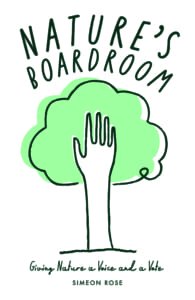 Nature’s Boardroom by Simeon Rose is available for £14.99 on the Bristol University Press website.
Bristol University Press/Policy Press newsletter subscribers receive a 25% discount – sign up here.
Follow Transforming Society so we can let you know when new articles publish.
The views and opinions expressed on this blog site are solely those of the original blog post authors and other contributors. These views and opinions do not necessarily represent those of the Policy Press and/or any/all contributors to this site.
Image credit: Markus Spiske on Unsplash
SHOWNOTES
Timestamps:
00:49 – What is Faith in Nature?
06:08 – How did your role evolve beyond marketing at Faith in Nature?
10:22 – When does the idea of embedding nature as a shareholder take place?
13:38 – Was there a link between Faith in Nature and Patagonia making similar organisational moves?
16:36 – How did you practically embed nature as a shareholder into decision making?
19:48 – How does Nature get represented in a typical meeting?
25:14 – Do you think something like this could happen at a different company, such as Boeing?
30:00 – What do you mean by ‘kill your darlings’?
Transcript:
(Please note this transcript is autogenerated and may have minor inaccuracies.)
Martin Parker: Hello. Welcome to the Transforming Business podcast. My name is Martin Parker, and I’m a professor at the University of Bristol Business School. It’s my huge pleasure today to be doing an interview with Simeon Rose, the author of ‘Nature’s Boardroom: Giving Nature a Vote and a Voice’. Simeon has a background in advertising and is brand director at the company Faith in Nature.
He’s also the co-creator of Nature on the Board, and in his book, he puts forward a series of very provocative suggestions for how we might give nature a voice in business strategy and decision making. So, Simeon, welcome.
Simeon Rose: Thank you. Hi, Martin.
MP: Hello. Can I start off just by asking you to do a kind of general introduction to the company, Faith in Nature, because as we’ll see later on, they’ve been doing some pretty radical things. But can you explain a little bit about where this comes from?
SR: Yeah, sure. So Faith in Nature, for many of you perhaps still don’t know, make natural personal care products. So soaps and shampoos and conditioners and I say that up top about for the many of you who perhaps still don’t know, because until maybe around ten years ago, we were quite a small company and yet we were at that point 40 years old.
So we were established in 1974, and for a long time were a sort of a mainstay in the Indies and health food sector. And, you know, we had our loyal fans. I think perhaps Bristol is a hotbed, a real hot spot for loyal fans of Faith in Nature. But that certainly wasn’t the case nationally, and it definitely wasn’t the case internationally.
So founded by an aromatherapist and herbalist, so much is in the name, right, like actually the name says an awful lot. So by the time that I started working with the company in around 2016-ish, my role in that was initially to make what was a much loved company, but not a very well known company, make it more mainstream.
And so we started, you know, we started really just interrogating that name. Until that point, well, well-loved, little known personal care company.
MP: And why did they bring you on board and what was your, what was your particular focus in terms of the marketing of this brand?
SR: So, my partner Anne and I, we have family links to the company, and our background is in advertising and branding. So we were working on all sorts of brands everywhere on making their brands sing and dance. And around about the time of 2016. You know, our background, by the way, is in adland, essentially, and around about the time of 2016, there was this huge explosion in interest around natural lifestyles and more environmentally minded ways of living.
And yet there was this small company that we were quite close to, that we felt should be much better known for what it was doing, and it just seemed like a gift, like the opportunity to come and to work with a company called that, with the values that it has, and with some of the things that it has done over its 40 year period, at that time.
It was just a total no brainer and something we jumped at. You know, we didn’t obviously know that it would become what it has or that we would do the things with it that we have since done. But when you’re given the point of a name like that and the values that it has and the fact that over its history it’s always been one of those sort of maverick companies trying things and provoking and going, well, why does it need to be this way when it could be that way?
Like that’s sort of ingrained in the culture. And I think to a creative, and a creative team, I mean that’s a dream opportunity really.
MP: And you and your partner were already sort of politically sympathetic to companies that are exploring questions of sustainability and the green stuff and so on.
SR: Yeah, that’s what interested us the most. You know, we, in adland, you do kind of have to take whatever brief is given to you until you branch out on your own, which we eventually did. And when we did that, increasingly, the companies that we were most drawn to were ones that often founder-led actually, but certainly ones that were sympathetic towards the natural world, ones that wanted to change things.
And, and one of the very interesting trends we were noticing at the time was this talk around purpose, right? People would actually bring us in and say, articulate for us what our purpose is. And we’d be like, well, don’t you already know that? Isn’t that like, isn’t that the key to what you do? And shouldn’t everything fall out of that?
But weirdly, not. Like actually, I don’t think it was always the case that businesses started with that front and center and perhaps that’s a little unfair, because our job is really taking what’s in the air and articulating it and bringing it down onto a page. So often, often companies and people did know this, but it wasn’t always as pithy and as understood as perhaps it could be.
That was not the case with Faith in Nature. With Faith in Nature it was like pretty obvious what they cared about. It’s exactly what we cared about as well. Love of the natural world goes back a long way. I grew up in the countryside in South Wales and grew up in, when I say countryside, I mean something completely different.
I mean the bush, middle of nowhere, in Australia. But I think a point had come in our lives where we were just wanting to do what we could with the gifts and the opportunities we had to do our bit for the natural world too.
MP: That’s been beautifully expressed, and it’s it’s a really helpful pre-history for what comes next, I think as well, isn’t it? I’m particularly interested in your comment about the purpose thing, which is obviously become something of a meme in business over the last decade or so, sort of replaces culture in a way, doesn’t it? A kind of similar sort of word. But the idea that you would get somebody in to articulate your purpose, does sort of seem a slightly odd thing, as if you didn’t know what it was to start off with.
So this was a company that was already committed to, in terms of its supply chains and its manufacturing and its products and so on, committed to trying to achieve zero carbon for, you know, looking at impact on the environment and so on. So when you were brought in, it was mainly initially about the marketing of these products, but then it became something else.
Can you talk a little bit about that process?
SR: Yeah, sure. So initially that’s right. Initially you know they had a great skeleton. You know, they had so much in place. They had their ethics. They had their values. They had their initiatives in place. What they didn’t have was mainstream awareness because, you know, they were a small company. But even with all of that, we, you know, the first part of our job, really, regardless of who the business is, is to try to articulate that and try to get it down to something super clear.
So before we even started looking at how we might repackage them or do the superficial stuff we presented to them a fairly provocative idea, which was to take them a remodeling of their org chart. So, you know, perhaps a bit leftfield for an ad team to come in and go, here’s your org chart. But it was such a, it unlocked something really big for us.
We took the org chart exactly as it was and just moved everybody down a layer, and instead at the top we created a new level and put nature there so that from that point onwards, it didn’t really matter who was at the top, so to speak. There was always this level of nature above them.
MP: Just stop you for a second. So where did that idea come from? Because it sounds very counter-intuitive, doesn’t it, to be. You know, normally we think about human beings as being parts of organisation charts. Why did you think that it was a good idea to put nature at the top? Where did the idea come from?
SR: I mean, it’s there in the name to a degree. Also, when you know, when we speak to people internally, sometimes little gems come out, you know, and the founder, Rivka, when we spoke to her, she said, well, you know, we’re not in control, nature is. And within all of that, there’s just sometimes an instinct.
I think, to be honest, like sometimes there’s just, it was a growing interest and a belief of ours that actually that was perhaps not true in that exact sense, but certainly that we’re part of a much wider web you know that this idea that, you know, humans are always at the top is clearly false. Businesses weren’t doing an awful lot with that idea at the time, but there was a leap of faith in there.
There were a few different ideas and conversations and thoughts converging on what we just felt would be a really beautiful articulation. And the other reason we did it was because it enabled us to say so with that model in mind, what might it mean for what we’d been brought in to do? What might it mean for the branding?
What might mean for the way we look and our packaging and all the rest of it? So what it let us do, is by saying, imagine for a minute that we’re not creatively directing this, but nature is. And if that’s the case, what should this look like? And the natural aisles at the time, other natural products, competitors, if you like very beige, very minimal and polite.
And we were like, that’s not what nature looks like. That’s completely, that’s actually what’s counterintuitive. So that just unlocked something for us and that unlocked something for the designers. And it unlocked actually something for everyone because alongside the org chart and alongside that, that creative approach, we also wrote the words ‘nature is the boss’ across the walls of the boardroom as a constant reminder and something that people could always answer back to.
And so it worked really beautifully for design, because, you know, what greater inspiration than the natural world? Over time, we started to realise the value of this way of thinking, actually for all, for all that we were doing. And ultimately ‘nature is the boss’, that wording got slightly softened and became, ‘what would nature say?’
That is also a very powerful way of imagining what perhaps a company like Faith in Nature, certainly called Faith in Nature, should be doing.
MP: Yeah, that’s really nice. And my sense is, and I don’t know whether you agree with this, it kind of starts off as a metaphor, but then hardens into something of a concept for governance. So at what point then, does the idea of embedding nature as a shareholder, stakeholder, value holder or some kind then take place? This is sort of 2018, 2019, something like that?
SR: That’s right. So perhaps rumblings around about that time certainly around… So Anne and I joined the board, sort of 2020ish. And I think what was going on outside of Faith in Nature was perhaps then what led to the next bit. And that was us looking at the rights of nature movement more broadly and seeing what else was going on in the world and seeing that perhaps what we were, you know, intuitively pursuing was a real movement and not just a movement, but like an absolute massive idea, like a colossus of an idea, the idea that, you know, we take for granted that humans should have our rights recognised, but it’s only really become a much more prevalent conversation that, you know, the rights of nature are also inalienable, and that we should be recognising those and considering how we can implement those in the real world. And that was already happening, you know, in the wider world, countries such as, certainly Latin American countries, Ecuador, Bolivia, others, were recognising the rights of nature at a constitutional level, other countries where perhaps it wasn’t recognised across the board were beginning to recognise the rights of aspects of the natural world.
So like the Whanganui river in New Zealand is the much cited version of this. And certainly I think the example that led us into this way of thinking, because when we started seeing that the Whanganui River, for example, had been granted legal personhood, meaning that it could speak in its own best interest via a framework that was created for that, it started making us wonder whether or not we could pick up that framework and drop it into a corporate.
In Anne’s words, because she made this leap, she just said, ‘well, what if nature really was the boss?’ You know, we were on this board. We were making these decisions. We had these words written above us and obviously there’s instinct in this and there’s, you know, there’s what’s happening in culture and there’s belief. There’s also a big chunk of serendipity in all this too.
And just being able to say, well, hang on a minute. We’re already kind of doing this, but we haven’t made it a real framework, not a governance framework. Is that possible? That’s what led to the next bit. And it was with that question that we called Lawyers for Nature here in the UK, and Earth Law Center in the US.
MP: Brilliant. So that’s a really nice summary. So there’s this increasing sense in sort of legal theory and public policy that nature needs to be represented. But that was primarily initially happening at sort of state level, really. Well, state level and regional levels in various states. But you are then trying to move this, these ideas into an organisational setting.
You mentioned in the book that’s round about the same time that Patagonia, the clothing company, start to do something quite similar. So there’s clearly something in the air. And I don’t think there’d been any sort of correspondence between you and Patagonia about these questions, had there?
SR: No, there was nothing, you know, there was… From our side we got to this point of realisation, you know, the reason Anne leapt to, ‘well, what if nature really was the boss?’ was because as board members who are no longer just looking at packaging and design and that sort of stuff, but being asked to consider much broader and more logistical complex questions, we realised that actually didn’t really matter what decision we made.
All decisions make, will have some impact upon the natural world. But the one voice never in the room is nature’s own, you know? So you’ve got this stakeholder which is impacted by literally everything, arguably the biggest stakeholder, certainly the biggest provider of everything for us. And yet that stakeholder has no say whatsoever. And I think that thinking is essentially what underpins a lot of the rights of nature thinking.
Now, and obviously moves it from extractive resource to, you know, collaborator, facilitator, all everything that nature actually, genuinely is. So it’s no real surprise that companies sort of thinking similarly would want to really test that and see what was truly possible. I think there was a degree of inevitability about it, I think like what felt really spooky was the fact that Patagonia and we arrived at pretty much the same kind of idea at what was actually exactly the same time, and had it not been for news cycles, because I forget the exact days, but Queen Elizabeth the Second died, which meant that, the story of what we’d already done got pushed out a week or two.
That didn’t happen for Patagonia, US company. They launched with the story that they’d made Mother Earth or Mother Nature their only shareholder. That gained huge traction, obviously, and two weeks later, we said we’d made a nature director and it was incredible, like it was just a moment in time where you had these two different models emerge at precisely the same time.
But looking at the problem through different ends of the telescope, because they did, they intend towards the same outcome, a more equitable outcome for nature, but they go about it in different ways.
MP: Yeah, it’s fascinating and in a sense it’s a really interesting sort of case study in the way that ideas and practices are changing. I mean, because ideas about stakeholders have been around for quite a long time now, since at least the 80s or 90s. And very often when you put sort of, I’m teaching this stuff at the university, then I would certainly put nature down as a stakeholder.
But that’s largely a metaphor for most people. And it’s rarely embedded in terms of governance. Now, the obvious next question to me. And then if, you know, if our listeners are on board with what we’ve talked about so far, is the practical question. So it’s all very well saying that nature is a stakeholder or a shareholder.
What did you actually do in practice to embed this into decision making?
SR: So this was, you know, having taken it from creative idea, the reason that we took it to actual nature lawyers was to say, this is a nice idea, but how can we give this teeth? i.e. how can we actually make this real? Otherwise it remains just a nice metaphor, as you say, but it was fairly clear that systems like this could work because we’d seen them working elsewhere, like with the Whanganui.
So what we’ve essentially adopted is pretty much the exact same model that the Whanganui adopts. And that’s the guardianship model. And the way that that was first described to me was to imagine a child who might need to appear in court but can’t legally represent themselves. So therefore they need a guardian to speak on their behalf.
So that was the starting point with the case of the Whanganui its guardians are people from the Whanganui people and also members of the Crown. So they speak together. It’s not one person’s voice, it’s a group effort and what Lawyers for Nature, and Earth Law Center and Brontie Ansell in particular, who was kind of the architect of the model did was to amend our objects within our articles.
Because what she realised, though, actually, was that British corporate law was pretty permissive, you know, like we have to work towards the success of the company, but a) we can define success, i.e. no successful business on a dead planet is sort of underpins part of this. But also there is a big gray area around that where we get to say, well, sure, we can be a successful company, but we can also stand for something else.
So amending the objects clauses to state that we exist for the success of the company, but also, the protection of the planet, naming nature as director, in the same way that another corporate might be a director of a corporate, you know, companies are already granted legal personhood. We sort of take that for granted.
And go well that makes sense, even though it doesn’t particularly like it doesn’t make an awful lot of sense. If you consider that those are largely imagined things in some ways, whereas the natural world is a real thing. So why can’t we employ the same, you know, why can we employ the same thinking to make nature a director, which is what we did.
And then within the articles expand that to mean that whilst the entity nature and that’s meaning all beings essentially that’s the natural world and all beings within is the legal director, its guardians can be numerous, can change, and can be a rotating cast essentially of proxies. And that’s exactly what we have. So what that enables us to do is have guardians in the room speaking on behalf of the director, that is nature, and nature through them has an equal voice and an equal vote to all other directors.
MP: So describe the boardroom a bit more for me. So, you know, we’re kind of familiar with the way in which decision making happens at senior levels in organisations. So you’ll have somebody representing, I don’t know, finance, somebody doing marketing, someone for operations and so on. And then you have somebody else in the room, in this case, somebody from Lawyers for Nature who is throwing some skepticism on some of the ways in which those decisions are being justified, being rationalised, and so on.
Just talk me through a kind of what a typical meeting would feel like.
SR: Yeah. No, I think that assumption that, a Guardian would always lead with skepticism is perhaps what scares people. Because actually, this whole model was designed to say, well, hang on a minute. Let’s go back. All decisions we make impact the natural world somehow but nature never gets a say. What we want to know is actually what nature would do.
Like that question, what would nature say? So whilst yes, nature is free to express skepticism and to question, the real role of that is to provide insight. And it’s an insight that was lacking until that point, you know, and what that enables is, over the course of time, a confidence in other directors and a confidence in the business more widely because you’ve got someone there speaking from the point of view of the natural world.
Bear in mind also that we are called Faith in Nature. We are a company trying to do our best by nature. So therefore what we’re trying to juggle often is not, let’s say, good versus bad, but we’re just trying to figure out what the least worst thing we can do is. So having somebody there to essentially guide you and give that perspective is really valuable.
And, yeah, initially the Guardians were from Lawyers for Nature, and Earth Law Center. That’s because they designed the model. And we needed, you know, essentially we needed that framework embedded. But another thing I talk about in the book is this idea of ecological succession. And that’s the idea that, you know, one plant makes the necessary conditions for the next plant to take root.
And if you think about that in Guardians, in the case of guardians, the lawyers are there to create the framework, but ultimately to allow us to bring in the perspectives of people who have spent their lives in the field, in conservation, in plant science, in botany. And that’s what it’s led to. So our current Guardian, Brontie is still in the background, inputting where necessary on the legals.
But our day to day guardian is Juliet Rose and she’s head of development at Eden Project. She is all the things I’ve just mentioned. She’s a plant scientist, a conservationist and head of development, i.e. her role is essentially about bringing people in the wider community into the natural conversation. So if you consider the type of company we are, we’re entirely reliant on plants.
So it’s incredibly helpful and useful to understand what’s happening, especially in the face of climate change. You know, our supply chains, for example, are we going to be able to get the plants that we currently use in five years time? If not, what are their analogues? Where might they be growing instead? How might we go about replacing them?
What is, what do we need to consider in order to essentially create a degree of resilience for five years time or however long you know, that perspective wasn’t in the boardroom before, even though actually when you lay it out like that, it’s clearly needed. At the same time, she’s a conservationist, so she’s very well placed to tell us what, what the impacts of our decisions are so that we can make more informed decisions and the head of development role, i.e. bringing the community in.
That’s a beautiful thing to have as well, especially wrapped up in one person, because we really want the whole company to feel a part of this. And that’s really necessary. You know, ultimately, this is not and we’re a few years in now, so we’re in our fourth year of working with this model, but it is not for Juliet to make all nature based decisions.
What we ultimately want is for the whole company to feel empowered and more informed and able to input, and for Juliet to be there as a sounding board and for Nature’s Guardians to be there as a sounding board, speaking on behalf of nature and a guide, but not the only people speaking on behalf of nature.
And also, just to add one point to that, the Guardians also have the right as in, we’re trying to reimagine what the rights of nature look like within the company, the guardians have the right to consult. So where I said that they are proxies in some ways, although experts in their own rights in others, we’re not saying that we expect any one guardian to know everything about nature, because that’s impossible.
What we are saying is that they should be well placed if a certain issue arises to know where to look for the right answers. And that’s the perspective that they bring back to the boardroom.
MP: Really exciting. I love the way you talk about this, and one of the things about the book that I particularly enjoyed was that it’s written very clearly, but also maintains this sense of kind of time and change and experiment, because you talk quite a lot about the idea that this is what you’ve done, and you kind of clearly hope that it will be inspiring for some other people who are involved in companies and so on.
But at the same time, you’re pretty clear towards the end that this isn’t necessarily, you know, the only way in which we might think about these things. One of the sort of comments that would be fairly obvious for somebody listening to this podcast is that, do you think it was kind of easier at a company like Faith in Nature with a bunch of people who are already committed to particular kind of values? In other words, and to put it provocatively, could you imagine something like this happening at an airline company at Boeing or Airbus?
SR: I think it’s a great challenge, and I think it’s really interesting to imagine that other end of the spectrum. I think you need, it was always going to take a company like Faith in Nature or like Patagonia, frankly, to open the door, you know, you were always going to find people more willing to take that leap.
And because of who they are, because of who we are, I think then the onus is upon us to prove that we can be, you know, this is not an act of altruism necessarily. It is an act of recognising stakeholder rights, but it is also an act of trying to prove that this is a success and we can do all of this whilst also being a commercially successful company.
Right? That all of that is wrapped up within the framework. And that’s why, you know, I talk sometimes about believing in proving by doing. It’s also why it’s interesting that, well, I mean, the book is coming out now, but this is sort of a good moment in time to say, well, actually, look, look at how this is going. At the end of each year as part of the framework, we also publish a report publicly which details absolutely everything that’s happened in relation to nature on the board and what we term nature related matters, which are effectively all matters.
And all of that is detailed and you can see that we’re working through things and that some things work, and that other things don’t and that we are I mean, in terms of growth of the company, we’re growing. You know, we’re growing in a way, though, that businesses must consider part of their growth plan, i.e. a sustainable way to grow that doesn’t completely wreck the planet upon which we’re all dependent.
So, yes, it took a company like Faith in Nature with the beliefs, perhaps, and the purpose that we have to go through that door first. But we’re just the pointy end of the arrowhead, right? Like, we’re entirely reliant on plants and we realise that our entire business is based on the health of the natural world.
But ultimately, if you track back far enough, all businesses are. Like every single one of them, is reliant on the health of the natural world in some way or another, if you go far enough back in the supply chain and so it is interesting to imagine the Boeings of this world and whether or not they will step into this space.
Right now, I’m really focused on all the companies who can clearly see that this is true for them right now, because the other side to this is that we need a lot of us to be figuring this out together, right? So yes, we’re figuring out what we can at Faith in Nature, other companies are as well. House of Hackney was the second company to implement this model and include within it the rights of future generations as well, by the way, because the model has flex, but there are more and more organisations coming on board and trying to figure this out with us.
There are around 25 at last count, and I recognise that those 25 are still a long way from the other end of the spectrum. But that doesn’t matter, because, you know, we’re just trying to deal with those immediately around us and those who are already stepping into this way of thinking and trying to continue proving by doing.
And hopefully one day we’ll get to have those conversations with those much more unexpected companies, too. By the way, we have had conversations with very unexpected partners and conversations. They haven’t yet done it, but banks, funds, lots of unexpected places are at least wanting to learn about this, because I think there’s a growing recognition across the board that new models must be tried, and we have to embrace some level of experimentation.
You know, the system that basically got us into this mess is not going to be the exact same system that gets us out of it. So, you know, let’s explore.
MP: Absolutely. I’m mean I think that it’s very easy for commentators to talk about greenwash in this area, isn’t it, to kind of assume that what we’re discussing are very minor changes to an existing system. But the story of Faith in Nature and the way you’ve talked about it, is a fantastic example of how governance changes can have some real effects.
And it’s been fascinating to hear you talking about this stuff, and hopefully, thinking of you as the, as you put it, as the kind of the tip of a growing movement. Last question, which is an odd one in some ways. But towards the end of the book, you talk about killing your darlings.
Yeah. So this idea of a kind of a sort of a restless spirit in your company and the possibility that what you’re doing now will change and become something else in the future. Could you just say a couple of words about that before we close?
SR: Yeah. So the kill your darlings thing is something that certainly Anne and I have worked with for ages in the creative fields. And that basically means that you’re playing with an idea and sometimes you’re trying to wrestle an idea. You know, you love an idea so much that you’re trying to wrestle it into fitting even when it doesn’t.
And ultimately there’s freedom in just going, you know what? That didn’t work. We have to move on. And I think the idea that I’m referring to mainly there is that we should be designing systems and worlds exclusively for the benefit of humans. Like, that’s the idea that I think has got us into the mess we’re in, rather than designing systems and worlds that take into account the needs and wants of all beings and the entire web of life.
So that’s the system I’m referring to there. Within all of that, you know, I see nature on the board as an expression of the rights of nature. I see it as an expression of this sort of systems change. And what I’m really excited about is what it leads to. You know, I think it’s an intervention in some ways.
It’s not the, it’s not the end. It’s the means to get us to whatever comes next. But it’s a really valuable means because it brings in those other perspectives. It brings in other expertise and the more nature centric way of looking at the systems that we have to operate within. So, yeah, let’s see where it leads to next.
But we’ll only find out by adopting the tool that is nature on the board, I believe, and tools similar to it in the short term. And, and I look forward to revisiting this same question in five years time, or however many years time.
MP: Wonderful. Thanks ever so much. I’ve been talking to Simeon Rose about his book ‘Nature’s Boardroom: Giving Nature a Voice and a Vote’, published by Bristol University Press. It’s a really inspirational story and a fantastic book with some nice illustrations and written in a really kind of gentle but punchy way. So thanks for spending time with us, Simeon. It’s been a pleasure talking to you.
SR: Thank you very much.