


Recent analysis of child death case files held by the National Child Mortality Database (NCMD) provides stark evidence that current approaches to knife crime prevention intervene far too late. These records constitute the most comprehensive national data available on children in England who have died from stab wounds, offering rare insight into the lives of children prior to fatal violence – and into moments when intervention was possible but did not occur.
Each case file documents the death of a child and the devastation left behind for families and communities. The purpose of examining these records is not to abstract or depersonalise loss, but to learn where systems failed to intervene, and what would need to change to prevent future deaths. At the heart of this evidence lies a simple but politically significant proposition: children should have the right to violence support at the earliest time, every time.
Rethinking what counts as ‘knife crime’
Public debate often frames fatal knife crime as a problem of serious youth violence in public space. Yet the NCMD data complicates this narrative. Only a proportion of deaths aligns with this framing. Children were also killed at home, in the context of domestic violence, by family members, or in attacks that fall outside dominant policy understandings of youth violence.
Nearly three quarters of the children were known to children’s social services prior to their deaths, and around a third had active involvement at the time. These were not children who were invisible to systems. Rather, they were children whose experiences of violence were not understood in their totality, and whose exposure did not trigger meaningful, timely support. Recognising children’s right to violence support at the earliest point would require moving beyond narrow definitions of knife crime and acknowledging violence wherever it occurs in children’s lives.
Unlike the many violence prevention strategies that focus primarily on perpetrators, this analysis centres children as victims. It shows that the distinction between victim and perpetrator is often unstable. Many children experienced violence across home, school and community – sometimes harmed, sometimes harming, often both. A rights‑based approach to violence support would start from this complexity, rather than forcing children into simplified categories.
Domestic violence as an unaddressed site of harm
One of the clearest findings relates to violence within the home. Nearly six in ten children had experienced domestic violence or abuse. In three cases, children died during incidents directly linked to attacks on their mothers. Yet none received specialist, child‑focused domestic abuse support.
Where domestic abuse was recognised, responses were usually routed through adult‑focused safeguarding systems. Only seven per cent of cases recorded a referral to any domestic abuse service, and none involved targeted child provision. This reveals a structural gap between recognising harm and responding to it – a gap that persists because children’s access to support is treated as discretionary rather than as a right.
Three patterns recur. First, children’s experiences were frequently minimised if professionals believed they had not directly ‘witnessed’ violence. Case files recorded assumptions that children were unaffected, despite repeated police callouts, school disruption and refuge placements. A rights‑based framework would reject this logic entirely, recognising that children are harmed by living with violence, regardless of whether they see it.
Second, access to support depended almost entirely on parental consent. When consent was withheld – often in contexts of fear, poverty, insecure immigration status or distrust of services – cases were closed. The child’s needs vanished with them. If children were to have a right to violence support at the earliest time and every time, access could not hinge on parental compliance alone.
Third, risk assessment remained adult‑centric, prioritising immediate danger to non‑abusing parents over cumulative harm to children. Several children whose cases were graded ‘standard risk’ later died from stabbings. A rights‑based approach would foreground children’s long‑term safety, not just short‑term risk thresholds.
School responses that punish, rather than protect
For many children, school is not a place of safety but another context in which violence surfaces. Nearly one in three school‑aged children had perpetrated violence at school, and almost one in ten had been victims there. Some disclosed domestic abuse to trusted staff, illustrating the potential for early intervention.
Yet disclosures rarely led to specialist support. Distress more often manifested as anger or aggression and was met with exclusion or alternative provision. Behaviour was managed rather than understood. Case files repeatedly noted a lack of consideration of how behaviour might link to violence at home. If children had an enforceable right to violence support, schools would be supported and required to respond to distress with care rather than correction.
When mental health services become a holding space
Concerns about mental health or neurodiversity were recorded in over three quarters of cases, but referrals to CAMHS were limited and inconsistent. CAMHS appeared to operate as a catch‑all pathway in the absence of specialist services addressing violence and trauma.
Repeated rejected referrals did not reflect a lack of need, but a mismatch between children’s experiences of violence and available provision. A rights‑based model would require dedicated child violence specialists, so that early disclosures reliably lead to appropriate support.
The policy shift that is needed
Across the dataset, violence was experienced across multiple domains, yet responses were fragmented and siloed. Despite recognition of children as victims under the Domestic Abuse Act, support remains optional and contingent. Knife crime and violence against women and girls (VAWG) strategies continue to operate in parallel, rather than in dialogue.
The evidence points to the need for a fundamental shift: children should always have the right to violence support at the earliest opportunity – after first disclosure, after subsequent harm and regardless of where violence occurs. This approach would move prevention upstream, reduce reliance on late‑stage policing responses and address racial disproportionalities through investment in specialist ‘by and for’ services.
The question is no longer whether the evidence exists. It is whether policy is willing to recognise violence support as a child’s right – and act accordingly.
Jade Levell researches masculinity, vulnerability, and violence, with a particular interest in the interplay between victimisation and perpetration, using creative research methods including music elicitation and craftivism.
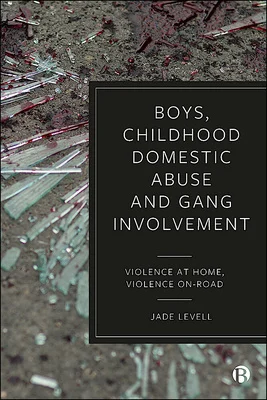
Boys, Childhood Domestic Abuse and Gang Involvement by Jade Levell is available on Bristol University Press for £29.99 here.
Bristol University Press/Policy Press newsletter subscribers receive a 25% discount – sign up here.
Follow Transforming Society so we can let you know when new articles publish.
The views and opinions expressed on this blog site are solely those of the original blog post authors and other contributors. These views and opinions do not necessarily represent those of the Policy Press and/or any/all contributors to this site.
Image credit: Hossam M. Omar via Unsplash