


According to official statistics, approximately 19,000 sexual orientation hate crimes were recorded by police in England and Wales in 2025. There were also about 4,000 transgender hate crimes in the same year.
It is difficult to obtain data on hate crimes in prisons, however, because crimes often go unreported and prisoners may choose not to declare their sexual orientation or gender identities.
From the available data in England and Wales, it is reported that 97 per cent of prisoners who declared their sexual orientation in 2025 identified as heterosexual. In the same year, 339 identified as transgender.
Given the statistics, a key question emerges: are prisoners who identify as lesbian, gay, bisexual, transgender, queer/questioning, intersex, asexual and those with other identities (LGBTQIA+) more exposed to harm within prison systems than other prisoners?
Segregation
Research shows that LGBTQIA+ prisoners are often segregated for their own safety, particularly when they experience homophobia, biphobia, transphobia and explicit violence, including sexual assault. This response is reactive and limits their freedom at a time when they, like all prisoners, are living in a tense environment with restricted access to their families.
Segregating LGBTQIA+ prisoners for their own safety increases the sense of isolation and might feel, to some, like an additional punishment.
Fear of disclosure and underreporting
Prisoners may be reluctant to disclose that they are LGBTQIA+ due to fears of discrimination or abuse. They might ‘come out’ to some people but not others, and this creates emotional distress.
Lack of disclosure may also result in prison officials believing that the number of LGBTQIA+ prisoners is smaller than it is which can result in institutional inertia.
Hypermasculinity and prison culture
Prisons often cultivate cultures of toxic masculinity that reward macho and misogynistic behaviour. For some LGBTQIA+ prisoners, these intensely masculine environments erase queer identities, normalise homophobic and transphobic attitudes and drive expressions of LGBTQIA+ identities underground.
Transgender prisoners and institutional barriers
Transgender prisoners are more likely to experience poor mental health, including depression and risk of suicide. They also face increased levels of discrimination and a lack of support. They will often have been allocated to a male or female prison based on their biological sex rather than their gender. Transgender prisoners may be denied access to appropriate clothing, safe showers and toilets and medical treatment.
Staff training, awareness and institutional culture
Prison staff may lack sufficient knowledge to address issues related to transgender people in prisons. In some cases, they may ignore the discrimination and harassment of LGBTQIA+ people because they believe it to be inevitable.
Lack of staff knowledge and adequate training may also result in LGBTQIA+ people not receiving adequate advice and support, forcing prisoners to depend on informal sources of information, and relying on support from other LGBTQIA+ people.
Repeatedly coming out
Moving to a new prison often requires LGBTQIA+ people to repeatedly undergo a process of ‘coming out’. They are continually under the gaze of other prisoners who are often trying to work out if they are queer. Some LGBTQIA+ prisoners will pretend to be heterosexual or cisgender due to fear or to hypermasculine cultures.
Sexual relationships and health risks in prison
Some LGBTQIA+ prisoners may develop sexual and romantic relationships with other people in prison, although these relationships are often experienced secretly. After all, the decision to divide the prison estate according to biological sex is intended to stop relationships and sex from taking place in the first place. In practice, relationships between prisoners of the same sex do take place regardless of sexual orientation.
Some heterosexual prisoners engage in relationships with others who are heterosexual. Heterosexual prisoners also have relationships with LGBTQIA+ people and LGBTQIA+ prisoners have relationships with other prisoners who are also LGBTQIA+. The ‘jail gay’ is frequently discussed in research studies. This is a prisoner who is ‘gay for the stay’, but adopts their heterosexual identity on release.
Sexual relationships can lead to sexually transmitted infections (STIs) and HIV; the amount of STIs in prisons is ten times higher than in the general population. Prisoners may be reluctant to access health screening due to fear that the results of health tests will not remain confidential.
Access to contraception varies across prisons, and prisoners may be reluctant to request it because of the prohibition of sex in prison.
Policy implications and reform for LGBTQIA+ prisoners
All prisoners are vulnerable, but LGBTQIA+ prisoners experience higher levels of vulnerability. They face increased risks of discrimination, harassment, isolation and sexual assault. Within the intense masculine environment of the prison, they may be forced to conceal their identities, leading to feelings of stigma and shame.
So, what should prison leaders do to address the issues? Addressing these challenges requires strategic, systemic action.
Inclusion policies must be robust and ensure compliance with equality legislation. But this does not guarantee that inclusion will be experienced by LGBTQIA+ people on the wings.
Investing in staff training is an important step in the right direction. Signage should communicate clear messaging about the institutional commitment to LGBTQIA+ inclusion.
Ensuring equitable access to contraception, health screening and medical interventions for all prisoners is important to keep prisoners safe. Reviewing safeguarding policies through the lens of LGBTQIA+ is essential.
Developing inclusive library spaces and prison education curricula and creating allyship networks within prisons are initiatives that help to increase the visibility of queer identities.
There are other things that can also be done. However, the starting point for promoting LGBTQIA+ inclusion is to do something rather than to do nothing. Change starts with one action, an action that will create a ripple effect and potentially save lives.
Scott Thomas is a higher education student of criminology, business and psychology in a UK prison.
Jonathan Glazzard is Rosalind Hollis Professor of Education for Social Justice at the University of Hull.
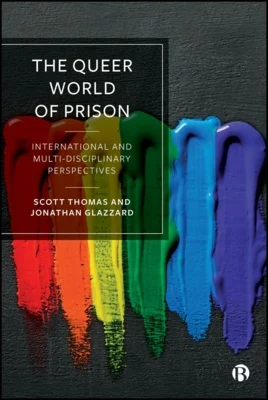 The Queer World of Prison by Scott Thomas and Jonathan Glazzard is available on Bristol University Press for £85.99 here.
Bristol University Press/Policy Press newsletter subscribers receive a 25% discount – sign up here.
Follow Transforming Society so we can let you know when new articles publish.
The views and opinions expressed on this blog site are solely those of the original blog post authors and other contributors. These views and opinions do not necessarily represent those of the Policy Press and/or any/all contributors to this site.
Image credit: lilartsy via Unsplash