


The authors of One Woman’s Story of Violence explore how violence develops, how we understand it and how we might respond to it differently. What happens when, instead of asking only why someone committed an act of violence, we ask them to tell us how violence gradually became imaginable?
For several months, we met and talked with Stefania Albertani, an Italian woman convicted of killing her sister and attempting to kill other members of her family. Her story had attracted much media attention in Italy. It contained many of the elements that make violent crime irresistible to public storytelling: family conflict, deception, a woman who had committed extreme acts, and questions about mental illness and responsibility.
But when we began our conversations with Stefania, we were not interested in producing another explanation of what she had done. Nor were we looking for the hidden psychological key that would finally make the case intelligible.
We wanted to listen. That may sound like a modest ambition. In fact, listening to someone who has committed serious violence is anything but simple.
Understanding is not excusing
When violence occurs, there is an understandable desire for clear answers. We want to know what kind of person could do such a thing. We search for causes, diagnoses and motives. Public debate often moves quickly towards familiar categories: perpetrator or victim, rational or irrational, evil or ill. These categories can be necessary. But they can also close down the very questions we need to ask.
Understanding violence does not mean excusing it. It does not mean diminishing responsibility or asking victims to forgive. It means trying to reconstruct the world from within which certain actions came to seem possible to the person who committed them.
This distinction became central to our conversations with Stefania.
Over the course of 11 long meetings, we returned to her childhood, family relationships, experiences of recognition and rejection, fears, desires and memories. We talked about the violent acts themselves, but also about what surrounded them: the relationships that had deteriorated, the stories she had told herself about other people and about herself, and the possibilities she believed remained open to her.
We were not excavating a past that contained a ready-made explanation. Something else was happening. Through dialogue, memories acquired different meanings. Contradictions emerged. Some interpretations became less convincing; others became possible.
The story was being constructed in the encounter. We came to think of this way of working as a ‘transformative interview’. Unlike an interview designed simply to extract information, a transformative interview treats conversation as an encounter that may change what can be understood. The interviewer is not a neutral collector of facts, and the person being interviewed is not simply a source of data. Both bring questions, interpretations and assumptions into the conversation.
This does not mean that the interviewer’s task is to change the person being interviewed, or to lead them towards a preferred version of their story. The transformation we are interested in is different. Through sustained dialogue, people may find new words for experiences they had struggled to describe, reconsider connections between events, or see their own actions from a different position. The researchers, too, may discover that the categories and explanations they brought with them are inadequate.
In this sense, understanding is not something we extract from another person’s story. It is something that can emerge between people when there is enough time, trust and willingness to remain with difficult questions.
Listening changes what we can see
This matters beyond one criminal case. We live in a culture in which violence is constantly narrated. News reports, documentaries, podcasts, television series and films transform acts of violence into stories. Those stories help us make an otherwise disturbing reality intelligible. But they also shape what we are able to see.
When someone commits an extreme act, there is a powerful temptation to reduce that person to the act. A human life becomes a crime, a diagnosis or a headline. This can be particularly striking when the person who committed the violence is a woman, because female violence still disrupts deeply rooted expectations about gender, care, vulnerability and aggression.
Listening complicates that picture. It requires us to hold together things that we might prefer to separate: suffering and responsibility, vulnerability and agency, victimisation and the capacity to harm others. A person can have suffered without this erasing responsibility for the suffering they later cause. Someone can be responsible for terrible actions without every aspect of their identity being exhausted by those actions.
This is uncomfortable territory. But perhaps criminology – and public debate more generally – should sometimes make us uncomfortable.
Violence has a history
One of the most important lessons we learned from listening to Stefania is that violence rarely begins at the moment when a violent act occurs. Before the act there is a history.
There are relationships and conflicts. There are humiliations, silences and failed attempts at recognition. There are imagined futures and stories people construct about who they are, what others have done to them and what options remain available.
None of these things mechanically causes violence. Many people experience suffering, humiliation or isolation without ever becoming violent. The point is different: if we want to understand violence, we need to understand the process through which a particular person comes to interpret their world in a particular way. That requires time. It also requires resisting the demand for an immediate explanation.
Our conversations with Stefania repeatedly reminded us that people do not necessarily possess a transparent account of why they acted as they did. They may contradict themselves. Their memories change. They may discover meanings in telling their story that they had not recognised before.
Listening, in this sense, is not simply collecting information. It is creating a space in which a person can look again at their own actions and the world in which those actions took place.
Why listening matters
There is a broader social question here.
What would change if our responses to violence made more room for this kind of listening? Not instead of justice or responsibility. And certainly not instead of listening to those who have suffered violence. But alongside them.
If we reduce people who commit violence to monsters, we may reassure ourselves that they belong to a world entirely different from our own. Yet violence is produced within human relationships and social worlds. Understanding those worlds is one of the ways societies can learn to recognise how violence develops – and perhaps intervene before it becomes irreversible.
Listening cannot undo violence. It cannot restore a life that has been lost or erase suffering. What it can do is resist the idea that understanding and accountability are opposites.
After years of listening to one woman’s story, we have become convinced that the opposite may be true. Taking violence seriously means refusing easy answers and remaining with the difficult question of how a human being came to harm another human being.
Only then can we begin to ask the question that matters beyond any single case: what might we learn from that story that could help us respond differently to violence in the future?
Adolfo Ceretti is Professor of Criminology at the University of Milano-Bicocca. His work focuses on violence, terrorism, restorative justice and epistemology.
Lorenzo Natali is Associate Professor of Criminology at the University of Milano-Bicocca. His research focuses on violence, environmental harm and the development of innovative research methodologies for understanding how people interpret and give meaning to harmful experiences.
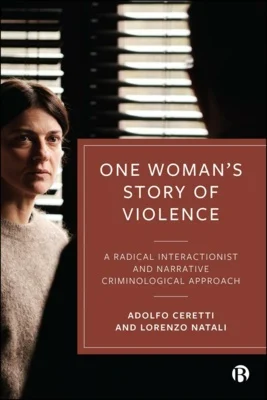 One Woman’s Story of Violence by Adolfo Ceretti and Lorenzo Natali is available on the Bristol University Press website. Order here for £90.00.
Bristol University Press/Policy Press newsletter subscribers receive a 25% discount – sign up here.
Follow Transforming Society so we can let you know when new articles publish.
The views and opinions expressed on this blog site are solely those of the original blog post authors and other contributors.
These views and opinions do not necessarily represent those of the Policy Press and/or any/all contributors to this site.
Image credit: Liana S via Unsplash