


M.C. Loureiro, author of ‘Colonial Citizenship’, discusses how Luiz Inácio Lula da Silva’s victory marks a moral and political turning point, showing how democratic solidarity and the recognition of human diversity can challenge growing authoritarianism, inequality and the influence of powerful elites.
Lula’s historic comeback is more than an electoral result: it opens the possibility of a moral choice between wider oppression and liberation.
On 25 October, Luiz Inácio Lula da Silva was elected president of Brazil for a fourth time, with 51.79 per cent of valid votes against Flávio Bolsonaro. He became the first candidate since 1989 to win a run-off after losing the first round, and the first Brazilian elected to a fourth term.
The comeback was built on a massive digital campaign and on the L salute, a sign of resistance across generations and state lines. From Brazil, the salute keeps travelling: raised by Mexico’s president Claudia Sheinbaum, inside Chile’s Congress, in French left-wing campaigning and across social media by figures such as Pedro Pascal and Zara Larsson, it is becoming something broader than Brazil, the construction of a political alternative.
In my book, Colonial Citizenship, I describe the political and legal context we are living through as a ‘situationship’: a paradoxical condition reproducing both distance from and closeness to rights and protections, with rights promised to many but realised by few.
Brazil makes it visible. Its 1988 Constitution, one of the world’s most comprehensive bills of rights, coexists with severe socioeconomic inequality. The results pose a choice between the situationship’s two sides: staying closer to the promise of rights, however unrealised, or widening the distance between rights and those who need them most. The ballots have spoken, and the majority chose the former.
Democracy is where this closeness–distance relationship is negotiated, where the balance tilts closer or further away, where citizenship chooses the tilting point and democracy chooses what is enough. It is there, in the electoral process, that we decide whether social disparity will turn law away from supreme right (summum jus) and towards supreme wrong (summa injuria), as Hermann Heller once warned.
The realisation of the situationship, of the unfair ways in which liberal rights and protections are attributed, prefigures a bigger moment. I have called it a ‘moral political moment’: the moment when societies choose either to side with emancipatory equality, towards supreme right, or to further instrumentalise law for oppression, letting supreme wrong prevail. This was an election marked by American techno-oligarchs, foreign interference and deep fakes: capitalist realism at its most naked. Billionaires no longer buy influence quietly; they try to buy elections. Algorithms no longer filter reality; they flood it. The system has reached an uber-realist point, undeniable and no longer pretending.
What Mark Fisher called ‘capitalist realism’ thus gains political materiality. The condition he named, the widespread sense that capitalism is the only viable system and that no alternative can even be imagined, is no longer a silent atmosphere we breathe: it has a face, a portfolio, a platform, and it aims at democracy itself, the last space for dissent that capital could still somehow tolerate.
When Fisher quoted Fredric Jameson and Slavoj Žižek, that it is easier to imagine the end of the world than to imagine the end of capitalism, he was naming a colonisation of the imagination so complete that dissent arrives preformatted, precorporated, harmless. The moral political moment is where this starts to change: the return of the capacity to imagine, and then to choose, otherwise. This moment rests on three movements that are, in truth, one: the revelation, the crystallisation and the new morality. Fisher, sadly, is not here to see it.
Revelation begins with the situationship and the post-truth order it has exposed. Global powers breach international law in colonised strips, genocide has become protected, country-favourite policies rule global governance. This reveals the fake neutrality behind the law, its legal rule irretrievably broken, in what Norberto Bobbio and Susan Marks have called ‘broken-promise democracies’.
In the Brazilian context, a techno-oligarch defied the Supreme Court, prosecutions for crimes against democracy were called ‘witch hunts’, prohibitive tariffs defied commercial rules and foreign nations welcomed politicians evading judicial travel bans.
Crystallisation follows. Recent decades of Black, LGBTQI+, migrant, Indigenous and women’s movements have constructed a much-needed panoply of real human diversity. Risen, surely, within a liberal politics in which exclusivity equals value, these identities are nonetheless fundamental to a real way of seeing humanity. They create a democratic point of no return.
For many years, lives marked by gender, sexuality, skin colour, language and community were sacrificed in the name of morality; now they come to be the ones calling political morality, and humanity, to the table. Erika Hilton, a Black transgender woman, has just received the highest number of votes for a woman in the history of Brazil’s Chamber of Deputies. Further north, Chris Pappas has become the first openly gay man elected to the United States Senate. Both exemplify crystallisation against ‘wokery’, the elastic term of derision that Sam Hitchmough and Shaun Wallace examined on this blog.
To many who were once undecided, the moral thing to do now seems to be to accept rather than to exterminate. The other side grows in direct proportion: Brazil’s two highest-backed deputies, both from Bolsonaro’s Liberal Party, passed three million votes each, and the party elected 121 deputies. The call to dehumanise rises with the call to protect. That is what a moral political moment looks like.
The new morality follows. The existence and survival of diverse lives, self-embedded sacrifices, teach humans and the system a lesson. The fight for the lives of those who are poor, who are pushed into sex work, who are marginalised because they live in dysphoria, who are oppressed because of their skin colour, segregated for their mother tongue, discriminated against for their disabilities, is a call for a shared humanity.
We emerge in different families and communities, scaling up our understanding of humanity and learning to choose right from wrong. When the factual has been impregnated with the artificial, the human is the place we go back to.
Born in a post-factual time, this moral political moment must stand on the human: it must move in and not out; it must come from the humanity we still hold in the face of electronic creation, from the flaws and idiosyncrasies of love and lust, desire, harm and care. It must come from being human and connecting with humans. Morality re-emerges as the election of the human as the moral choice.
Brasil, with an S as we write it, has made this visible. In a country touched by Portuguese pre-industrial colonialism, where Black, Indigenous, Arab, Asian and White coalesce, where to be one of us it matters only that you feel you are: an identity so plastic it can embrace most of humanity.
There, an intergenerational pact joined grandparents and grandchildren, survivors of a foreign-backed dictatorship and state homicide, and the young with their universities and digital footing, in building a country and a global call to see beyond the situationship and its algorithm. The L raised in Mexico, the USA, Chile and France is that call in motion.
Today, a country known for showing bodies and opening hearts means more in a sea of machines and dematerialisation. Its power lies in calling us back to the very beginning: us. Brazil stands as a symbol. It shows real human love, as Paulo Freire would put it, in an era of deep fakeness, artificial reality and algorithmic manipulation. A movement led by a working-class man from the deep Global South is now making its way north and wide. Ave humans.
MC. Loureiro is a legal philosopher and political theorist whose work focuses on citizenship, rights and justice. He is the author of Colonial Citizenship: Law, Race and Rights through the Portuguese Empire and is currently writing his second monograph, Favela Theory: Citizenship from Below.
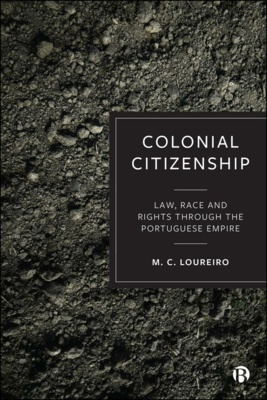 Colonial Citizenship by M.C. Loureiro is available to order on Bristol University Press here.
Bristol University Press/Policy Press newsletter subscribers receive a 25% discount – sign up here.
Follow Transforming Society so we can let you know when new articles publish.
The views and opinions expressed on this blog site are solely those of the original blog post authors and other contributors.
These views and opinions do not necessarily represent those of the Policy Press and/or any/all contributors to this site.
Image credit: Palácio do Planalto via Flickr