


An elderly woman sits with her hands tied behind her back while a young woman drapes coloured paper garlands around her neck. Nearby, another woman in an underdress forces a glass of champagne to her lips, while a clown grimaces in the background. A man in evening dress is enjoying the performance, glass in hand.
This grotesque scene from a masquerade ball is framed by two representations of naked women in the style of graceful Greek goddesses. The depiction sits within a ceramic decoration on the wall in the winter salon at the art deco brasserie Mollard in Paris. The elaborate interior was created by the famous architect Édouard Niermans (1859–1927) in the late 19th century, and became an innovative and exemplary model for the art deco establishment.
This example illustrates that sexuality in restaurant decor is nothing new. Restaurants have long used sexuality not merely as decoration but as part of their commercial and cultural appeal. Across historical and contemporary contexts, dining spaces intertwine appetite and desire in ways that normalise gendered power relations. In this sense, food porn is not confined to digital media but embedded in restaurant spaces themselves.
Art deco desire: Sexual imagery in historic restaurant decor
Many might not notice the obvious sexualised content in these art deco representations as they enjoy their plateaux de fruits de mer or Mollard’s steak tartare. In other cases, however, the sexualisation is more explicit, as in so-called ‘brestaurants’, exemplified by chains like the American Twin Peaks.
These establishments cater primarily to a male clientele, offering a menu centred on meat-heavy dishes such as ribs, burgers and steaks. As noted by Twin Peaks’s marketing director, “men are simple” – they want to drink beer, eat large portions of meat, and watch sports on big screens, all while being attended to by scantily dressed female employees. The waitresses, whose low base salaries necessitate reliance on tips, are also expected to engage in flirtatious interactions with customers.
Here, female bodies are not simply decorative, but integral to the business model, turning gendered availability into a commercial asset.
When sexualisation becomes the business model
Mollard and Twin Peaks demonstrate different degrees of sexualisation, but they show how gender and sexuality, in different ways, can envelop a restaurant space. The major differences between the spaces are that the sexualisation in the breastaurant example concerns actual living female employees, whereas at Mollard it is confined to decoration.
At the Parisian brasserie, the waiters are primarily male and dressed in formal suits. As in many popular Parisian establishments, they are rather arrogant and display their power as gatekeepers of the restaurant, according to reviews on Tripadvisor. The brasserie waiter is the male antimodel to the female submissive waitresses at the breastaurant. In both cases, gender hierarchy is staged as part of the dining experience.
Nostalgia and the ‘ironic male gaze’
Sexualised restaurant spaces can even be found in modern hipster areas, as we discovered in a study of meat-based restaurants in a progressive area of Copenhagen. One striking example was the gourmet hotdog restaurant Fodderbrættet.
The name refers to the board in front of Danish hotdog stands, the ‘foderbrættet’ – literally a ‘feeding board’ for garden birds. The deliberately unsophisticated name formed part of a broader play on good and bad taste which is inherent in the concept of gourmet hotdogs.
The interior was what made Foderbrættet stand out. The space had a bar-like vibe to it with booths and high bar tables. The dim lighting highlighted a series of black-and-white photographs on the walls: a series of retro advertisements for the sausage brand ZION featuring various images of half-naked women and sausages.
On one wall, a retro-style photo showed a model tackling an oversized hotdog, the kind of cheeky, over-the-top image that leaves subtlety at the door. Nearby, another playful shot featured a woman dressed like a snake charmer, coaxing a ‘serpent’ of linked sausages to rise from a basket. In both cases, the meat became a prop – tamed, posed and theatrically brought to life through the performer’s presence. The imagery turned food into spectacle: bold, camp and impossible to ignore.
These images were explicit but carried a nostalgic aesthetic. Their presence in a contemporary restaurant in a progressive neighbourhood created an ironic effect. Various colonial kitsch artefacts depicting Black and ‘exotic’ women reinforced this impression.
Taken together, the place seemed to construct an ‘ironic male gaze’. The sexualisation of women in the images was masked through nostalgia which in turn helped legitimise the otherwise explicit imagery. The restaurant reproduced the male gaze’s objectification of women while simultaneously rendering it ironic. This layering of irony and nostalgia allowed overt sexualisation to appear culturally sophisticated rather than regressive, masking objectification behind a seemingly playful aesthetic.
Three restaurants, three forms of sexualisation
These three examples – Mollard’s art‑deco theatrics, the American breastaurant and Copenhagen’s hotdog bar – show how differently restaurants can weave sexuality into their spaces. Sometimes it’s baked into the decor, sometimes it’s embodied by the staff, and sometimes it’s wrapped in layers of irony and nostalgia.
Foderbrættet didn’t stick around for long. It closed the year after our visit, just at the point at which the #MeToo movement was reshaping conversations about gender, power and public space. The timing wasn’t causal, but it was telling. Whether intentional or not, its closure coincided with a cultural moment at which ironic sexism began to lose its protective shield, as gendered power dynamics became subject to sharper public scrutiny.
Restaurants as stages of gender and power
Restaurants are not neutral settings but curated environments where appetite, gender and power intersect. The pornification of dining spaces shows how desire can be mobilised to normalise inequality, even when wrapped in nostalgia, irony or aesthetic sophistication.
Consider this an invitation to keep looking closely the next time you sit down to eat. Notice what the walls are saying, how the room is arranged, who is performing hospitality, and what stories the space is trying to tell and the subtle (or not‑so‑subtle) ways desire, identity and appetite are woven into the dining experience. Paying attention to these spatial cues matters because they reveal how cultural norms around gender and sexuality are reproduced in the everyday, often precisely where we least expect to encounter them.
Jonatan Leer is a Professor in Culinary Arts and Meal Science at Örebro University.
Stinne Gunder Strøm Krogager is Associate Professor of Mediated Communication at Aalborg University.
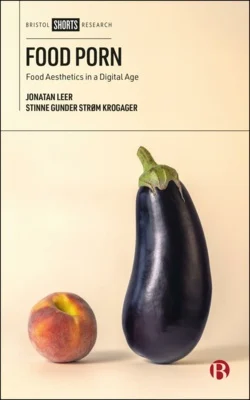 Food Porn by Jonatan Leer and Stinne Gunder Strøm Krogager is available for £40.00 on the Bristol University Press website here.
Bristol University Press/Policy Press newsletter subscribers receive a 25% discount – sign up here.
Follow Transforming Society so we can let you know when new articles publish.
The views and opinions expressed on this blog site are solely those of the original blog post authors and other contributors. These views and opinions do not necessarily represent those of the Policy Press and/or any/all contributors to this site.
Image credit: Deon Black via Unsplash