


Helen Keane, David Moore and Mats Ekendahl, authors of The Trouble with Drinking, argue that Andy Burnham’s celebration of pubs and moderate drinking highlights a tension between alcohol’s genuine social benefits and the increasingly dominant public-health focus on its harms, which can overlook class and gender inequalities and the value of community and pleasure.
“Three things you probably already know about me”, states a smiling Andy Burnham as he pulls himself a beer in a recent TikTok video. “I go to a lot of gigs, I do like a pint, and I have been known to give a DJ set from time to time.”
This is one of multiple social media clips in which the Prime Minister proclaims his business rate tax cut for pubs while enjoying his favourite beverage, at times in the company of his equally relaxed chancellor, John Healey. The setting is a cosy and stereotypically British drinking establishment (think Coronation Street’s Rovers Return).
Burnham is a master of social media, and these pint-forward videos carefully generate a web of positive meanings: authenticity, relatability, non-toxic masculinity, community and respect for homegrown national traditions. Certainly, sipping a Chardonnay or a G&T would not align with the Everyman Andy image, nor with the political challenge he faces as new leader of the Labour Party.
A positive vision of pro-social drinking is even clearer in an Instagram reel that begins with Burnham observing “This to me is our heritage. It’s working-class culture. Once pubs are gone, they don’t come back”.
The camera then shifts from convivial pub interior to bleak shop fronts and near empty streets while Burnham explains that “other businesses can cause social harm … adult gaming centres on high streets can often bring real harm to communities … people will see the vape shops that often don’t add much to community life and cause other issues too”.
The aim of his new business rates regime is “to give incentives to support the businesses that bring benefits, and look differently at those that cause social harm”.
Seen against changing norms around drinking, the portrayal of alcohol as a contributor to social wellbeing presents a striking contradiction. The political appeal of this message is clear, given the deep social and cultural significance of the local pub in the UK. Yet this celebratory vision of drinking sits uneasily alongside an increasingly prominent public-health message emphasising alcohol’s toxicity and harms.
The WHO now states that no level of drinking is safe and this advice is repeated in many national guidelines. The status of alcohol as a carcinogen is prominent in government publications and media headlines. For public health, alcohol is a toxic and inherently harmful substance, responsible for more harm than illicit and stigmatised drugs.
Indeed, commenters on Burnham’s Instagram reel quickly pointed out the harms of alcohol. For example, one said “I’ve never seen anyone get into a fight because they vaped too much”.
But when we examine the new politics of alcohol and health, can we really treat risk and harm as the only ‘evidence-based’ truths about drinking?
For example, in contemporary alcohol public health research, the ideal of moderate drinking has largely disappeared from view. Rather than a positive feature of social life, moderate drinking is now addressed as a pervasive health problem, especially since social drinkers are often accused of denying the public health truth of alcohol as a toxic substance.
It is impossible to deny the many harms relating to alcohol and their impact. Yet we can conceptualise the effects of drinking more broadly, to encompass gender, class, race and marginalisation, while also developing a more expansive vision of living with alcohol—one that recognises pleasure and community alongside risk and danger.
Part of the concern about the new politics of alcohol is its elevation of health to a quasi-religious status, in which the avoidance of risk is an obligation of good citizenship and a moral virtue.
In this moral landscape of consumption, public health and wellness culture are strange bedfellows. The latter reimagines sobriety as a journey of self-awareness and healing, transformative not just for ‘alcoholics’ but for us all.
Of course, health is important, but should it be the measure of all aspects of our lives? Should our present be lived as if it is the future that matters most? To us, this is a narrow and top-down view of human existence that risks stigmatising those people already disadvantaged.
In campaigns such as Dry January and other temporary abstinence challenges, the adoption of an ‘alcohol-free’ lifestyle promises happiness and wellbeing through individual self-improvement and self-surveillance, ignoring the powerful social and economic forces that structure life chances.
But the meanings attached to drinking are not distributed equally.
In our recent research we have identified some major changes in the way drinking is understood, but also persistent inequalities reflected in social norms about consumption, desire and pleasure. Who gets to drink, where, how and for what reasons? Whose drinking is treated as pleasurable, sociable or culturally meaningful? These are all questions shaped by class, gender, race and age.
Despite the rise of the ‘wine mum’, women’s drinking still faces strong social disapproval if it steps outside of norms of femininity (the level of disapproval and punishment is of course influenced strongly by race, class, sexuality and age). Women are seen as responsible for the health of others as well as their own, and therefore their drinking is easily categorised as excessive and a threat to social wellbeing.
Could a woman Prime Minister enhance her image by broadcasting her drinking habits on social media? Would this make her relatable or would it raise questions about her ability to cope with the demands of the job?
When we looked at media commentary on increased drinking at home during COVID lockdowns, we found that women’s drinking was often interpreted as a response to stress and anxiety, a way of coping with negative feelings. Men’s motivations for drinking, on the other hand, were more likely to be seen as positive – in terms of reward and pleasure.
Clearly, these gender differences continue to shape the contrasting public perception of drinking: as a valuable cultural heritage or as a threat to social and individual health.
The question, then, is not whether alcohol causes harm. It plainly can. The question is what happens when harm becomes the only legitimate language through which alcohol can be understood — and what forms of pleasure, sociability and community disappear from view as a result.
Burnham’s pint is therefore doing more than selling a tax policy. It is making a claim about what kind of social life is worth protecting.
The challenge for alcohol policy is to recognise that social life contains both pleasure and harm — and that neither can be understood without asking whose lives, identities and communities are being valued.
Helen Keane is Professor of Sociology at The Australian National University.
David Moore is Honorary Professor of Sociology at The Australian National University.
Mats Ekendahl is Professor of Social Work at Stockholm University.
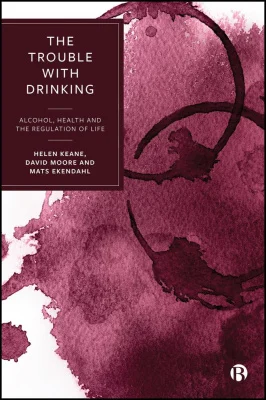 The Trouble with Drinking by Helen Keane, David Moore and Mats Ekendah lis available to buy on Bristol University Press or £27.99 here.
Bristol University Press/Policy Press newsletter subscribers receive a 25% discount – sign up here.
Follow Transforming Society so we can let you know when new articles publish.
The views and opinions expressed on this blog site are solely those of the original blog post authors and other contributors.
These views and opinions do not necessarily represent those of the Policy Press and/or any/all contributors to this site.
Image credit: Ben Black via Unsplash