


Politics and International Relations

George Miller discusses the What Is It For? book series, inspired by Gauguin’s existential questions, arguing that in an age of global “polycrisis,” critically examining the purpose of institutions can help us imagine better alternatives, even if it cannot solve problems outright.…Read more
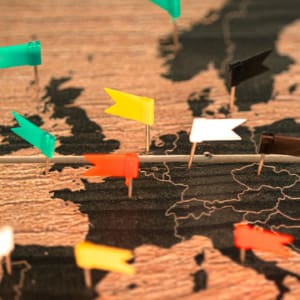
Emmy Eklundh, author of 'Europe’s Populist Condition', suggests that mainstream European parties are increasingly adopting populist-right policies, showing the divide between “mainstream” and “populist” politics is largely illusory.…Read more

Tara Lai Quinlan, author of 'Police Diversity', discusses how ICE’s aggressive raids in Minneapolis reflect a harmful “warrior” policing culture that damages community trust.…Read more

In this podcast, Richard Kemp speaks with Bahar Baser and Élise Féron about how the 'Journal of Disappearance Studies' serves as a space to break these boundaries and give this important field a unified platform.…Read more

Pushkala Prasad, author of 'Capitalism’s Dark Complexion', argues that capitalism has always been deeply racialised, exploiting Black and Brown bodies, from chattel slavery to modern e-waste labour, while disproportionately enriching White populations.…Read more

Simone da Silva Ribeiro Gomes, author of 'Latin American Activism and Routine Violence in the 21st Century', argues that across Latin America, activism is shaped not by isolated bursts of repression but by permanent, routine violence from both state and non-state actors, including paramilitaries and criminal organisations, which profoundly constrains collective action.…Read more

Rafe McGregor, author of 'Reducing Political Violence', argues that unprecedented global instability in the 21st century stems from the combined, accelerating crises of eroding political norms, rapid digital transformation, and unaddressed climate change.…Read more
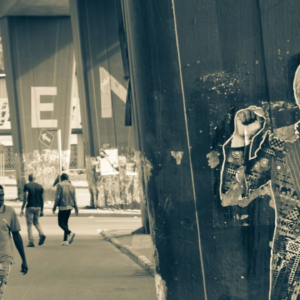
In this Transforming Society podcast episode, Richard Kemp speaks with Lord Peter Hain about why liberation and independence movements are so often betrayed when their leaders get into power.…Read more
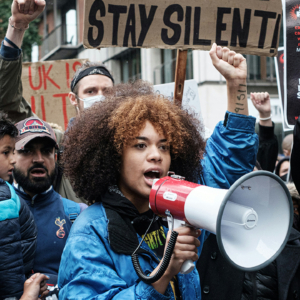
Akwugo Emejulu, Marlies Kustatscher and Callum McGregor editors of 'Ambivalent Activism', argue that while the far right is legitimised to mobilise anger and fear, left activism is constrained by compulsory “hope,” weakening its ability to harness powerful emotions like anger, grief and discomfort for social change.…Read more
From Bristol University Press and Policy Press, Transforming Society shares the powerful stories rooted in our research, showing how ideas can shape a fairer, better society.…Read more