


About ten years ago, I was in a conference centre in the centre of Reykjavik, watching French President François Hollande make a speech to assembled diplomats and journalists about the acute need to tackle climate change. Hollande and his entourage had just returned from a helicopter trip to a melting glacier that was set to disappear completely in the coming decades, one of several in Iceland that are entering their final illness.
Crouched on the floor of the conference centre in the press zone with my laptop, I looked around at the assembled group of journalists who had been sent to track their national delegations. The French had VIP access to Hollande and were ferried around in his wake, but there were also Americans, Canadians, Germans, Spaniards, Koreans and Chinese dispatched to report on what was happening. Each of us was telling a slightly different story, while none of us was able to tell the whole story.
Climate reporting often fragments crises into stories, beats and national interests, when the crisis itself is systemic, interconnected and planetary.
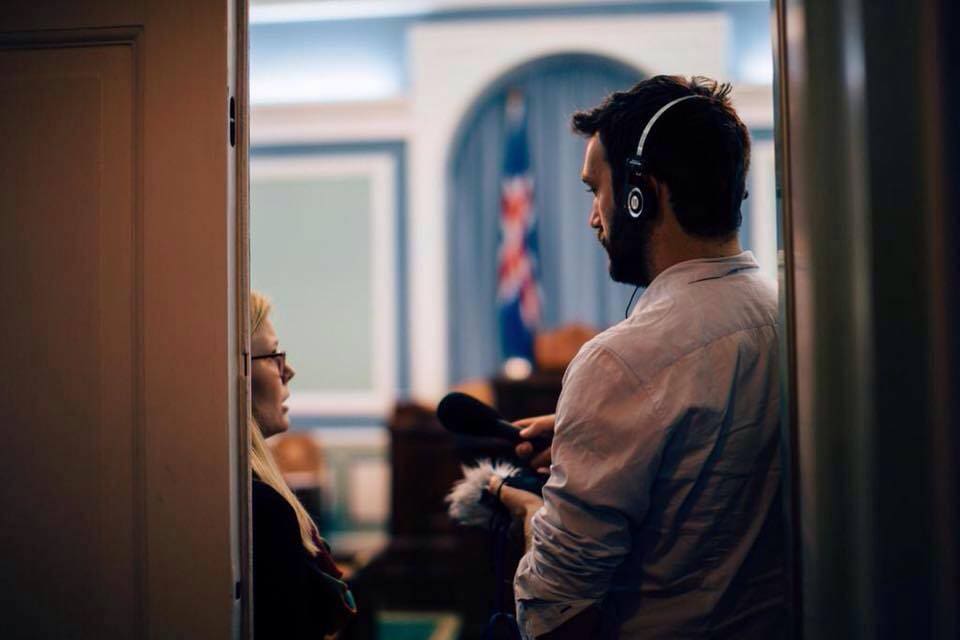
Icelandic parliament
From fieldwork to theory
Fast forward a decade, and climate change has grown demonstrably worse as carbon emissions have continued to climb. Shortly after my trip to Iceland I started working on the book that would become Journalism in the Anthropocene – an attempt to combine my experience of working as a climate journalist with my academic training in communication, the social sciences and the environmental humanities.
In many ways it began as I stood trying to remain upright in the press scrum so I could send the footage back to my employers in London and Washington. What, exactly, was I doing there? The money wasn’t good enough to justify spending a week in Reykjavik listening to people talk about ice and shipping lanes.
The Australian journalism theorist John Hartley called journalism the primary sense-making practice of modernity and, in a similar vein, the sociologist of time and risk Barbara Adam observed that it falls to journalism to produce what she labels ‘popular social theory’, a quote that became a framework for the project as a whole.
The problem is that journalists do not always understand the world they are making sense of. Even when they go in with good intentions and eyes open, they are pulled one way or another by gatekeepers and the economic demands of media work. And this is where it gets interesting.
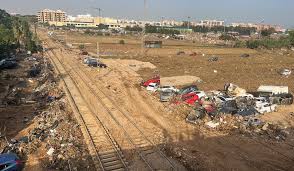
Cars and a ruined railway line after flash flooding in Valencia, Spain in 2024 (Dominic Hinde)
Journalism as sense making in modernity
Journalism as we know it has emerged in lockstep with the technological and material growth of global economy since the Industrial Revolution.
It is not just some external observer able to turn away and move on after saying its bit, but an integral part of earth history itself – what has generally come to be termed the Anthropocene.
Now the Anthropocene term itself is highly contested by social and earth scientists alike, but what
is most interesting is the so-called Great Acceleration in capital, technology and urban life since the Second World War that defines the world we live in today, the media included. What Journalism in the Anthropocene does is situate journalism as something more than a representational practice in all of this. Media makes modernity and makes the future, while participating in the present.
At the same time, journalism has been locked in a death spiral for some time. The recent announcement that the Washington Post would be cutting (though massacring may be a better description) its culture and foreign reporting to focus
on profitable sports and US politics coverage was the latest in a series of attacks on the diversity of the media ecosystem.
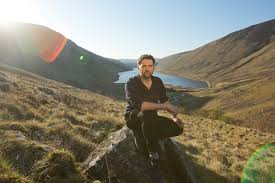
The writer and academic Dominic Hinde in front of the Talla Water, Scottish Borders (Ryan McGoverne)
The urgent need for a strong public sphere
To borrow an idiom from biology and atmospheric physics, we are experiencing system collapse, with no unified plan to bring public life back from the precipice, and we need a reliable public sphere more than ever. To do that we need to forge new forms of global and local media that are strong and supported, and don’t merely compete in a race to the bottom.
Journalism in the Anthropocene begins with a discussion of the world’s first simultaneous satellite broadcast, a 1967 show called Our World led by the BBC and other public service broadcasters that didn’t shy away from the threat of conflict, environmental destruction and the oncoming future. Its naïve belief in a brotherhood of man bound together by global media seems woefully optimistic today, yet at its heart was the belief and recognition that we need to tell the global story every single day.
If climate change journalism is to matter, it must stop treating the crisis as a topic and start treating it as the context for all reporting.
Dominic Hinde is a writer, climate journalist and lecturer in Sociology at the University of Glasgow.
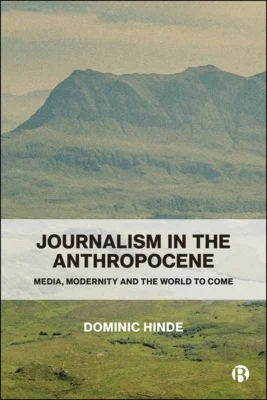 Journalism in the Anthropocene by Dominic Hinde is available for £14.99 on the Bristol University Press website here.
Bristol University Press/Policy Press newsletter subscribers receive a 25% discount – sign up here.
Follow Transforming Society so we can let you know when new articles publish.
The views and opinions expressed on this blog site are solely those of the original blog post authors and other contributors. These views and opinions do not necessarily represent those of the Policy Press and/or any/all contributors to this site.
Image credit: Inja Pavlić via Unsplash