


In late March 2026, the view from the Iranian plateau confirms a timeless strategic error: confusing military reach with political control.
Operation Epic Fury, launched four weeks ago, met its kinetic objectives by neutralising Iran’s senior leadership within hours. US and Israeli strikes decapitated the Iranian leadership and dismantled its conventional command structures with a speed that made the 2003 invasion of Iraq look sluggish.
Yet, as the dust settles, Washington has not achieved victory. This fiasco exposes the central paradox of our current era: As the technical ability to destroy targets reaches its zenith, why has the ability to secure a favourable peace never been more elusive?
The myth of technological warfare dominance
This intervention serves as a post-mortem for the myth of technological hegemony. By embedding artificial intelligence across the ‘kill chain’, the Trump administration has substituted human judgment with algorithmic determinism.
We have entered a ‘technopolar’ era in which superpowers leverage machine efficiency to mask strategic bankruptcy. The massacre of 170 children at a girls’ school near Bandar Abbas was not a technical glitch; it was a systemic inevitability, the collateral damage of a mindset that treats war as a data-optimisation problem rather than a contest of political wills.
As I documented in my analysis of failure in Afghanistan, technical precision is a poor substitute for a viable political objective. Once again, military force is being used as a substitute for a missing strategy, and the world is breaking because of it.
How air strikes strengthen rather than weaken regimes
History shows that bombing campaigns are often strategically inert. They rarely break a population’s resolve; instead, they catalyse a nationalist pivot toward the very regime the attacker seeks to displace.
The Woman, Life, Freedom uprising of January 2026, the most promising emancipatory movement in modern Iranian history, has been effectively crushed by American bombs.
By turning the Iranian landscape into a ‘target-rich environment’, Washington has forced domestic dissidents back into the arms of the security state for protection against ‘the Great Satan’. The potential for a genuine Iranian revolution has been sacrificed for the optics of ‘deal-making’ strength.
The strikes have achieved the one outcome the Islamic Republic could not secure for itself: the forced reconciliation of a democratic opposition with its own oppressors.
Iran’s long war strategy and the limits of US power
Tehran does not view these strikes as a terminal defeat, but as a ‘moment of punctuation’ in a generational war of attrition.
Having watched the Taliban’s ‘strategic patience’ outlast the West in 2021, the Iranian leadership knows that the American public lacks the appetite for a protracted occupation. Especially where the rationale for the war is poorly articulated, changing daily, and as inconsistent as it is unintelligible.
The Iranian regime’s strategy is a textbook application of the offence–defence balance: they will exploit the growing friction between Israel’s desire for a regional reordering and Washington’s desire for a short-term exit.
By closing the Strait of Hormuz, Tehran has weaponised the primary artery of global trade. This represents a pivot from conventional confrontation to asymmetric systemic warfare. Iran does not need to defeat the US Navy to win; it only needs to prove that Washington can no longer guarantee the safety of the world’s energy supply.
This demonstration of American impotence will force global markets to decouple from the declining promise of US security.
A transatlantic divide reminiscent of Suez
This strategic misalignment has triggered the most significant transatlantic rupture since the 1956 Suez Crisis.
While Washington views NATO as a secondary arm of its empire, European capitals, still scarred by the unilateral US withdrawal from Kabul, refuse to serve as auxiliaries to American strategic narcolepsy.
Under Keir Starmer, the United Kingdom has signalled a fundamental reset in the ‘Special Relationship’. European powers are no longer willing to rely on US competence when Washington itself treats its allies as subservient rivals.
This defiance carries a diplomatic price, but for Europe, it is cheaper than the electoral cost of joining an unpopular war of choice. Washington’s unilateralism has finally achieved the previously unthinkable: It has made the collective defence of the West a liability rather than a guarantee.
A turning point in the global order
The systemic implications are profound. Just as Suez exposed the hollowed-out nature of British imperial reach, the 2026 Iran War reveals a United States that can project power but can no longer recruit the actors necessary to maintain global stability.
This is a war without a rationale, an invasion launched not on faulty intelligence, but on a total absence of a ‘day-after’ plan. Washington has opened a Pandora’s Box it has no proximal ability to close.
This war has fractured the post-1979 regional order centred on Iranian power, but as the ‘Shia Crescent’ disintegrates, the ‘American Century’ expires in the silos of AI-driven command centres.
In the arc of history, 2026 will be remembered as the moment American allies realised the US reach had finally exceeded its grasp, and the post-American Century began.
Oz Hassan is a Reader in National Security at the University of Warwick. He authored the European Parliament’s Committee on Foreign Affairs study on Afghanistan, received the Middle East Policy Council’s 40 Under 40 award, and leads the Royal Society of Arts Global Affairs Network.
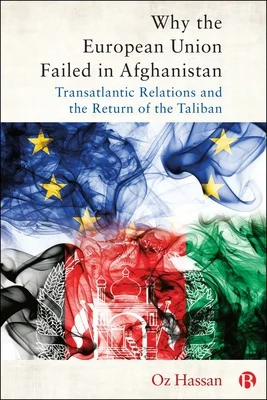 Why the European Union Failed in Afghanistan by Oz Hassan is available for £24.99 on the Bristol University Press website here.
Bristol University Press/Policy Press newsletter subscribers receive a 25% discount – sign up here.
Follow Transforming Society so we can let you know when new articles publish.
The views and opinions expressed on this blog site are solely those of the original blog post authors and other contributors. These views and opinions do not necessarily represent those of the Policy Press and/or any/all contributors to this site.
Image credit: Nils Huenerfuerst via Unsplash