


Graham Box and Kenneth Chambaere, authors of Assisted Dying, argue that while reintroducing the previous assisted dying bill may be politically practical, Westminster should instead learn from Jersey’s more consultative and flexible model to create safer, more widely supported legislation.
In recent years, assisted dying has been extensively debated across the British Isles. Initiatives to change the law in the Isle of Man and Jersey both succeeded, while proposals for Scotland (at Holyrood) and for England/Wales (at Westminster) were unsuccessful. As a result of a Private Member’s Bill that will be put forward in the coming session by Lauren Edwards, the issue will soon return to Westminster.
Ms Edwards has chosen to reintroduce the same Terminally Ill Adults (End of Life) Bill, sponsored by Kim Leadbeater MP, that failed to pass through Parliament in 2026. This bill was supported at third reading by the House of Commons but ran out of time in the House of Lords where more than 1,000 amendments were tabled.
However, this choice of starting point might be a missed opportunity to learn from other models, such as the Assisted Dying (Jersey) Law 2026.
The key provisions of the Leadbeater bill
The version of the bill that won the support of the House of Commons would have legalised assisted dying only for those considered terminally ill, meaning that they were reasonably expected to die within six months. Those involved would have to take their own lives (assisted suicide) and have the mental capacity to make such a choice. The request would need to be approved by two doctors, acting independently, and be deemed eligible by an Assisted Dying Review Panel comprising a lawyer, a psychiatrist and a social worker.
One more push
There are certainly sound motivations behind the approach favoured by Edwards. First, Kim Leadbeater’s bill was the object of unusually detailed scrutiny for a private member’s bill. Second, the bill was supported at third reading in the House of Commons by a majority of 314–291. Third, in the opinion of the proposer, the appointed House of Lords should not be permitted to thwart the will of the elected chamber.
A further potential consideration is that by proposing an identical bill, the option is retained to make use of the Parliament Act 1911 to adopt it, even without the support of the House of Lords. This approach is sufficiently plausible that the Hansard Society has drafted a briefing on the manoeuvre.
Edwards has stated that it is not her intention to make use of the Parliament Act but she also states that ‘we cannot allow an unelected minority to frustrate the democratic process for a second time’.
How might Westminster learn from Jersey?
Building consensus
Supporters of assisted dying legislation in England/Wales could take a breath and focus on building a wide and deep consensus behind their proposals. The Jersey process included a citizens’ jury, two phases of public consultation and a formal ethical review. Restarting the process in this way could also address one of the central concerns of the opponents of legalisation – that the measure is being rushed through without appropriate engagement and reflection.
Allowing voluntary euthanasia as well as assisted suicides
Assisted dying takes the form of either assisted suicides, where the patient ends their own life, or voluntary euthanasia, where drugs are administered by a clinician. The Leadbeater bill would allow only the former while the Jersey model legalises both methods. The latter is also the case in the Netherlands where euthanasia is very much the preferred option. Offering this choice can respond to the preferences not only of the patient but also of the family and care team. Voluntary euthanasia is also deemed safer with a lower chance of complications and allows access to an assisted death for those who are unable to end their own lives. Although the earliest attempt (going back as far as 1936) to legalise assisted dying in England and Wales proposed voluntary euthanasia, it rarely features in contemporary debates.
Allowing appeals
In seeking to be the safest bill anywhere in the world, the Leadbeater bill initially required High Court approval of assisted dying requests. When this met with widespread opposition, the bill was amended to include the Assisted Dying Panel mentioned earlier. These have also attracted strong criticism and, since they are not replicated anywhere else in the world, one might reasonably conclude that a sufficiently safe service can be provided without them. The Jersey model offers what might be considered a compromise safeguard whereby there is a limited right of appeal to the Royal Court for those with a ‘special interest in the care and treatment of the person, such as a family member’. This is an interesting innovation. The drawback here is that, if invoked, it may also lead to delay and additional stress for those involved.
What is next?
While understanding the motivations behind the reintroduction of the Leadbeater bill, we believe there are good reasons to question whether this is, indeed, the wisest approach.
There is much to be learned from alternative approaches in other settings, including models very close to home. For those who favour assisted dying, the challenge is not simply to pass legislation but to do it well, and to deliver a final model that is safe, effective and capable of commanding trust and confidence from those involved.
And, if legislation is passed, Parliament would do well to attach a periodic review of its implementation in order to address teething problems.
Graham Box, a former NHS manager and patient charity CEO, has taught Politics at Oxford University, Law at Reading University and currently lectures in Ethics at the Foundation for International Education.
Kenneth Chambaere is Professor of Public Health, Sociology & Ethics of the End of Life at the End-of-Life Care Research Group at Ghent University and Vrije Universiteit Brussel.
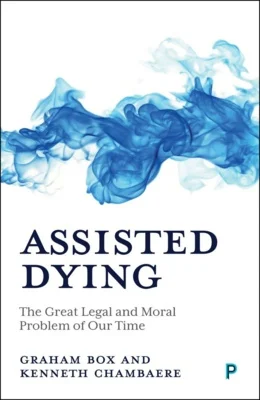 Assisted Dying by Graham Box and Kenneth Chambaere is available on Bristol University Press for £24.99 here.
Bristol University Press/Policy Press newsletter subscribers receive a 25% discount – sign up here.
Follow Transforming Society so we can let you know when new articles publish.
The views and opinions expressed on this blog site are solely those of the original blog post authors and other contributors. These views and opinions do not necessarily represent those of the Policy Press and/or any/all contributors to this site.
Image credit: marianne bos via Unsplash