


Since constitutional protection for abortion was overturned by the Dobbs v. Jackson Women’s Health Organization Supreme Court Ruling in 2022, an estimated five women across the United States have died, after being refused access to standard miscarriage care.
With the overturning of Roe v. Wade, activists, medical practitioners and lawmakers warned that the ruling would result in innumerable preventable deaths. Recent news from Texas – where abortion is prohibited in virtually all circumstances, under Chapter 170A of the Texas Health and Safety Code – confirms this reality. Here, 35-year-old Porsha Ngumezi became the third woman to die when doctors refused to perform a live-saving dilation and curettage procedure when she miscarried her pregnancy of 11 weeks, in June 2023.
Involving the dilation of the cervix and removal of pregnancy tissue using either a sharp instrument called a curette or a suction device, a D&C is a standard procedure used to diagnose and treat certain uterine conditions and is also used to clear the uterus after a miscarriage or abortion. Over the past 20 years, the use of surgical abortion procedures – including dilation and curettage, and vacuum aspiration – has been in steady decline and as of 2020, the majority of abortions carried out in the US were done via a regime of ‘abortion pills’, mifepristone and misoprostol. Pioneered in the 1980s by activists in Latin America who first discovered the abortifacient properties of misoprostol (a stomach ulcer drug), medication abortion facilitates self-managed abortion, both within and beyond the clinical context, making it a vital alternative in legally restrictive areas.
In liberalising contexts, like Ireland, where the constitutional ban on abortion was overturned in 2018, similar trends can be observed. While Ireland’s new system of abortion care is comprised primarily of medical abortion provision by community GPs in the first trimester, the abortion-seekers ‘right to choose’ between methods is enshrined in the law. Despite this, recent data show that some medical providers are reticent to engage in first and second-trimester surgical abortion care, because of fears of legal repercussions and the ongoing stigmatisation of surgical abortion provision in the medical community. At the same time, abortion-seekers have reported feeling ‘pressured’ into taking several rounds of medical abortion after a failed termination or being refused access to surgical methods of abortion care.
While these trends illustrate the ongoing politicisation of abortion across multiple contexts, they also demonstrate how medical practitioners have developed distinctive conceptual and affective frameworks for various methods of pregnancy termination. It appears that in both Ireland and the US (and perhaps other contexts too) methods of abortion and miscarriage care which require surgical intervention (specifically via the cervix) are increasingly stigmatised. As a result of this stigma, medical practitioners are opting for riskier methods of care which unnecessarily jeopardise the life and health of pregnant people and abortion-seekers. Returning to Texas, Ms Ngumezi is one of several women to receive only medication abortion when they asked for a D&C, with doctors fearful to perform the latter procedure believing that this could be perceived as illegal abortion care.
As VandeVusse et al. have argued, conceptual boundaries between abortion and other pregnancy outcomes are ‘blurry’ and often rely on considerations regarding ‘intent’. Abortion bans limit the ability of willing practitioners to provide vital care in all sorts of obstetric emergencies, including in cases of ‘intended’ pregnancy. It is this social construction of abortion then, which is both ‘cause and consequence of abortion stigma’. Abortions provided for ‘health’ reasons are justified as ‘acceptable’ if the individuals’ intent was to ‘carry the pregnancy to term’. Recent events on both sides of the Atlantic should bring our attention, I argue, not only to the socially constructed nature of abortion but to the social construction of abortion/pregnancy termination methods, and its effects in reifying abortion stigma, against a background of ongoing political contestation in reproductive rights.
The case of Porsha Ngumezi begs the question, I think, of how medical practitioners’ desire to demarcate their ‘intent’ as providers of ‘miscarriage care’ rather than ‘abortion care’ shaped their decision to offer medication abortion, rather than surgical intervention – a decision which ultimately contributed to Ms Ngumezi’s unnecessary death. It should be noted that Ms Nguzemi is one of several women of colour to have died in Texas over the past two years, while attempting to access reproductive care, illustrating once again how restrictive abortion laws have disproportionate effects on Black women and otherwise marginalised communities.
As political landscapes and legal frameworks surrounding abortion continue to evolve, the question of how various methods of pregnancy termination are socially constructed and variously stigmatised and the effects of these trends in shaping access to what is, often, lifesaving reproductive care, requires urgent attention as a key issue for reproductive justice scholars and activists, in the US, Ireland and beyond.
Aideen O’Shaughnessy is Senior Lecturer in Sociology at the University of Lincoln.
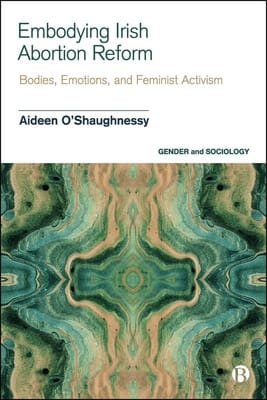 Embodying Irish Abortion Reform by Aideen O’Shaughnessy is available on Bristol University Press here for £80.00.
Bristol University Press/Policy Press newsletter subscribers receive a 25% discount – sign up here.
Follow Transforming Society so we can let you know when new articles publish.
The views and opinions expressed on this blog site are solely those of the original blog post authors and other contributors. These views and opinions do not necessarily represent those of the Bristol University Press and/or any/all contributors to this site.
Image credit: Sierra Houk via Unsplash