


Health and wellbeing
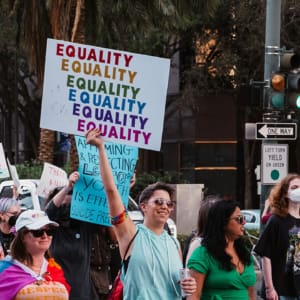
Lee Gregory, Eleanor Formby and Peter Matthews discuss how Scotland's rights-based social security system has improved the experiences of many LGBTQ+ claimants, while persistent discrimination and weakening political support continue to undermine genuine equality.…Read more

Joanna Mack, author of 'Impoverished', argues that tackling poverty in the UK requires bold, long-term reforms that combine fairer incomes, lower costs for essential goods, stronger public services, and a more universal welfare system rather than relying mainly on means-tested benefits.…Read more

The policy briefing highlights that, amid widespread UK food insecurity, food banks provide varied short-term support but lasting solutions require stronger social safety nets and measures that address the root causes of poverty.…Read more

Clare Bambra, Julia Lynch and Katherine Smith, authors of 'Getting Better', argue that declining healthy life expectancy and widening health inequalities in the UK are the result of political and economic choices, such as austerity, weak regulation and inequality, meaning they can be reversed through sustained policy action on welfare, public services and social conditions if there is political will.…Read more

Lee Gregory discusses how the May 2025 local elections showed that despite Labour offering stronger evidence-based anti-poverty policies than Reform UK, voters punished Labour’s cautious and unconvincing leadership while rewarding Reform’s emotionally resonant populist messaging.…Read more

Magda Romanska, author of 'Digital Access to the Performing Arts', highlights how the pandemic proved that digital theatre could dramatically expand access for disabled and marginalised audiences, but most institutions abandoned streaming after reopening, revealing persistent inequalities in cultural access.…Read more

George Miller discusses the What Is It For? book series, inspired by Gauguin’s existential questions, arguing that in an age of global “polycrisis,” critically examining the purpose of institutions can help us imagine better alternatives, even if it cannot solve problems outright.…Read more

Natalie Rutter and Sarah Waite, editors of 'Women, Relationships & Criminal Justice', argue that nearly two decades after the Corston Report, progress on reforming the criminalisation of women remains slow, and real change requires shifting the justice system from risk-based punishment to relationship-centred care and structural reform.…Read more
Brenda Herbert, author of 'The Everyday Lives of Children Who Have Experienced Domestic Abuse', argues that repealing the presumption of parental contact is a vital step toward protecting children from domestic abuse by challenging patriarchal systems that silence children’s voices and prioritise abusive fathers’ rights over children’s safety.…Read more

The article argues that improving pensions is essential if reforms to adult social care work are to genuinely address inequality, retention and job quality.…Read more