


Researcher and author of The Policing Mind, Jessica Miller is on a mission to transform how the police force responds to trauma as experienced by its serving officers.
“I talk about the policing mind, but fundamentally, it’s not about the mind at all. These people are absolutely broken hearted, and they just have to keep going.”
By bringing neuroscience to the UK police in the form of easy-to-implement trauma-resilience tools, Jessica believes it is possible to have a healthier, more stable force, better able to serve its public.
“It’s quite niche, bringing neuroscience into policing,” she says. “It’s about personal accountability which is counter to the culture of ‘doing what you’re told’.”
Increasingly, however, there’s an appetite within the police for the research and a willingness at the highest level to integrate this knowledge into the day-to-day machinations of the force.
“I thought I’d be really struggling to get the whole concept into policing and I haven’t; I’ve been pushing at an open door. They just needed someone to listen and to understand their full experience without hesitation. I was in a privileged position to do that.”
Since the publication of The Policing Mind in 2022, the College of Policing has been working with the National Wellbeing Service, the National Police Chiefs’ Council and the Oscar Kilo initiative to develop Approved Professional Practice (APP) guidance to point forces to a number of techniques included in the book as part of their commitment to wellbeing and trauma resilience.
Many of the tools they are interested in rolling out in their training are outlined in the chapter ‘Resilience practices for policing’. This includes the ‘Getting Perspectives’ technique with mappings and timelines, which enables officers involved in traumatic incidents to visually get a sense of what happened, when and where.
“If the police are not processing their trauma, they will just do the bare minimum to get by. Their personal relationships suffer, their compassion burns out and their rapport with the public is impacted. Under these circumstances they connect with people in any way that they can in the circumstances they are in – hence the WhatsApp groups we’ve been hearing about. Traditional peer support simply isn’t there anymore.”
Additionally, the Police Traumatic Events Checklist, also detailed in the book, is being integrated systemically through two national pilots this year. Case studies and guidance are being built to support the Checklist and a national steering group is in place to develop a more trauma-informed approach to managing working environments.
Jessica presented these tools and others at Scotland Yard in March 2023 as part of the National Wellbeing Board. During the session, she provided training for regional and inter-agency representatives for wellbeing, with a view to delivering and integrating the techniques at scale in the future.
At a political level, Jessica has given evidence to The Baroness Casey Review and she is currently contributing to the Productivity Review. A copy of The Policing Mind has been passed to the UK’s Home Secretary Suella Braverman.
“The conversation for the Productivity Review is less about techniques and more of a cultural piece, along similar lines to the discussion in Chapter One and the concluding chapter of The Policing Mind.”
“It’s about understanding the ‘stuckness’ when the police get bogged down with all the human suffering they are dealing with. They feel paralysed and often end up following due process because they are in threat mode.”
It is not just nationally that this work is getting attention. The Global Compassion Coalition have recently asked Jessica to write a blog for their platform based on her research. Their board comprises global neuroscientists including Rick Hansen, as well as the biggest names in Buddhist psychology and the global mindfulness movement including Joseph Goldstein and Rick Hanson as well as British celebrities such as Ruby Wax and personalities championing the cause in the UK such as Jennifer Nadel.
Jessica has continued to build on the results and findings published in The Policing Mind, including delving deeper into the impact that working conditions have on trauma resilience within the force.
As the keynote speaker at the Royal Foundation Symposium on the mental health of frontline workers held in November 2022, Jessica spoke about The Policing Mind and working conditions. Through recently published research, Jessica has identified that many of the reasons why police suffer from PTSD are actually related to their conditions of work, rather than the incidents themselves.
According to Jessica and colleagues, officers are more likely to experience PTSD if they feel their work is not meaningful. Against a backdrop of political rhetoric and negative public opinion, police work can feel futile.:
“Add to that the lack of ability to take off a few hours to deal with crises in their own family – meaning they regularly have to choose between family and job – and the lack of both peer support and line manager understanding of the impact of trauma. Taken together this creates a heady and unhealthy environmental cocktail.”
In addition to her work through Police Care UK, Jessica undertakes private training work with forces across the country. She has been pioneering in her support for and encouragement of the use of real-life bodycam footage in the training of new recruits, alongside the use of some of her techniques for dealing with the traumatic images the recruits are seeing.
“As I was responsible for the training, it was important to me that I also watched the footage ahead of the training. It’s horrific. But it’s a horror that needs to be faced head on, and with active compassion. They are dealing with child deaths, suicides, the mental health crisis, human suffering and deprivation every day.”
Jessica’s enthusiasm in advocating for changes within the police force is further emboldened by the new generation of police recruits that are coming through. The young people joining the force today are more ‘mental-health literate’ and have higher expectations of wellbeing in the workplace.
Despite the headlines we continue to see around poor police behaviour, Jessica believes we are at a crucial tipping point, one that must lead to a better police service:
“We’re in suspended animation at the moment. We’ve got the evidence, we’ve got the skills, we’ve got the budget – especially if you think about the cost savings through doing this, which will be huge – and we’ve got the right generation coming through.”
Dr Jessica K. Miller is consultant for the Royal Foundation, Director of Research at Police Care UK and Principal Investigator in the Department of Sociology at the University of Cambridge.
Rebecca Megson-Smith is a writer and writing coach, founder of Ridley Writes.
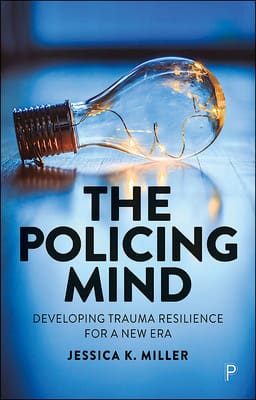 The Policing Mind by Jessica K. Miller is available on the Policy Press website. Order here for £21.99.
Bristol University Press/Policy Press newsletter subscribers receive a 25% discount – sign up here.
Follow Transforming Society so we can let you know when new articles publish.
The views and opinions expressed on this blog site are solely those of the original blog post authors and other contributors. These views and opinions do not necessarily represent those of the Bristol University Press and/or any/all contributors to this site.
Image credit: Max Fleischmann via Unsplash