


As we celebrate International Women’s Day this March, we must reflect on what has passed in order to enable us to move towards securing equity and justice for criminalised women. The Corston Report (2007) provided the UK with a definitive road map to end the disproportionate and discriminatory criminalisation of women, identifying the clear drivers of trauma, poverty, marginalisation and abuse.
Nearly 20 years later, these recommendations continue to gather dust, progress has been far too slow and the criminal legal system is still pushing itself in the wrong direction. We remain trapped in an ethos that reduces women to a set of ‘risk’ and ‘need’ indicators to be assessed and managed, rather than recognising them as people whose lives are shaped by a web of relational connections.
For women, criminalisation is almost never an isolated event; it is a stone thrown into a pond creating a ripple effect, and waves of instability that pull entire families and communities under the surface. Women’s criminalisation removes them from their children, punishes experiences of survival and fractures their surrounding relational infrastructure. The criminal legal system continually fails to recognise that relationships are the true foundations of justice and the primary force for transformative change. This needs to change. The collection Women, Relationships & Criminal Justice brings together diverse perspectives from research, lived experience and frontline practice through different forms of expression that offer alternative visions for the present and future.
Criminalisation is a relational issue, not just an individual one
Criminalised women are doubly demonised due to transgressions of both the social norms surrounding criminality and also what it means to be a ‘good woman’, facing judgement for not living up to patriarchal ideals of womanhood. This results in both stigma, as social injury and disabling force, and shame, by framing women’s failure as a personal and moral lapse. This completely ignores the structural and deep wounds of trauma, poverty, marginalisation and abuse, as well as the harmful impact of criminal legal processes.
This, however, does not only entrap criminalised women. Long ignored are their families – how they bear rights, how they are penalised by the state and how they experience stigmatisation within society, all of which create intergenerational trauma. The pain of separation and the fraught joy of reunification is conceptualised in the collection by Melissa Smith’s ‘A Mother’s Love’. This art work clearly demonstrates the layers of pain, hope and resilience carried in the darkest times. We need a criminal legal justice that recognises what is inflicted by systems, the state and society. We need to establish collective, generative networks of care rather than individualise blame.
Relationships aren’t ‘factors’; they are the foundation
The collection shines a light on the importance of moving beyond the binary, and argues that current frameworks within the criminal legal system recognise relationships as either positive influences that aid compliance or negative factors that drive criminalisation. This oversimplification ignores the lived reality of women. The collection shows us how dynamic relationships can both sustain and strengthen while also be strained, disrupted and reshaped through the processes of criminalisation and marginalisation. They are not – and can never be – a checkbox on an assessment form. However, risk-based culture prioritises numerical targets over human connection, under-resourcing the time for relational labour. Organisations working with criminalised women need access to secure, long-term funding to ensure they have the capacity for the heavy emotional lifting of managing trauma, responding to relational crises and navigating wider systems. Relationships hold enormous power, but they are fragile, complex and require continuous development. Therefore, the criminal legal system needs to invest in relational infrastructure that recognises and values the time and space required for communities to heal and connect.
Reimagining strength as collective action, not individual resilience
The criminal legal system often rewards a narrow, hollow definition of strength – the silent compliance, and a woman’s ability to endure her suffering without complaint. But true strength is found in collective action and activism where women stand together and nurture, care and mentor to survive a system designed to silence and punish. We need collective power. Strength is manifested when women reach for support and build community. We need to rise together, move as a collective and maintain solidarity to push for change. And we ask you to join us.
The importance of ‘tea and cake’
Relationships need humanity. The criminal legal system strips this away. It is individualistic, disciplinary and dehumanising. To embed humanity, we need to listen. Our listening needs to be:
- Intentional, in that it refuses to be rushed or transactional; it honours women’s time.
- Reciprocal, in that it recognises women as the experts in their own lives, creating a mutual exchange of knowledge.
- If possible, trauma-informed, so that it is acutely sensitive to power imbalances to prioritise psychological safety.
- Creative, so that it makes room for non-verbal expression, and different ways of knowing, seeing and hearing.
- Action-oriented, to ensure that it can lead to tangible change.
If we listen to extract, to purely understand risk and without a commitment to structural reform, we are failing both women as well as our understanding of how relationships are the true foundations of justice and the primary force for transformative change.
Building a relational future
The evidence is undeniable: To break the cycle of criminalisation, we must shift our focus from risk and individualisation to relationships and structural change. We cannot shoehorn relational ideas into a punitive framework that was designed to punish and control; we must consider how we can rebuild our systems around the principles of connection, co-production and care, to create space where we can stand in solidarity.
Relationships have the potential to change lives. The challenge is no longer about finding the evidence. It is about identifying the political and institutional will to build systems that support that power rather than erode it.
Natalie Rutter is a Senior Lecturer at the School of Social Sciences at Leeds Trinity University.
Sarah Waite is a Senior Lecturer, criminologist, active researcher and Co-Director at Leeds Beckett University.
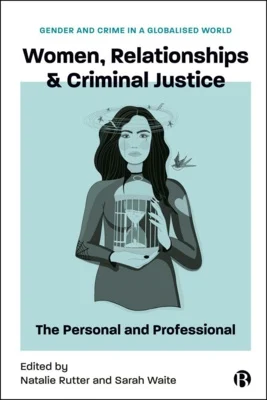 Women, Relationships & Criminal Justice edited by Sarah Waite and Natalie Rutter is available for £80.00 on the Bristol University Press website here.
Bristol University Press/Policy Press newsletter subscribers receive a 25% discount – sign up here.
Follow Transforming Society so we can let you know when new articles publish.
The views and opinions expressed on this blog site are solely those of the original blog post authors and other contributors. These views and opinions do not necessarily represent those of the Policy Press and/or any/all contributors to this site.
Image credit: Artak Petrosyan via Unsplash