


As part of our coverage marking the 16 Days of Activism against Gender-Based Violence in November, Sanandha Prabu, founder of Semua Sehat, a youth-led initiative advancing health equity among underserved and marginalised communities in Indonesia, draws on conversations with 50 Gerobak women in Bandung to explore the gap between having reproductive rights and being free to exercise them.
What does it mean to say “no” when saying no has consequences you cannot afford?
For some women, sexual violence does not begin with a stranger in a dark alley. It can begin with a partner refusing to use contraception, pressure to have sex, the expectation that sex is something she owes her partner, or pressure to have another child. The hardest violence to recognise is the violence that has become ordinary.
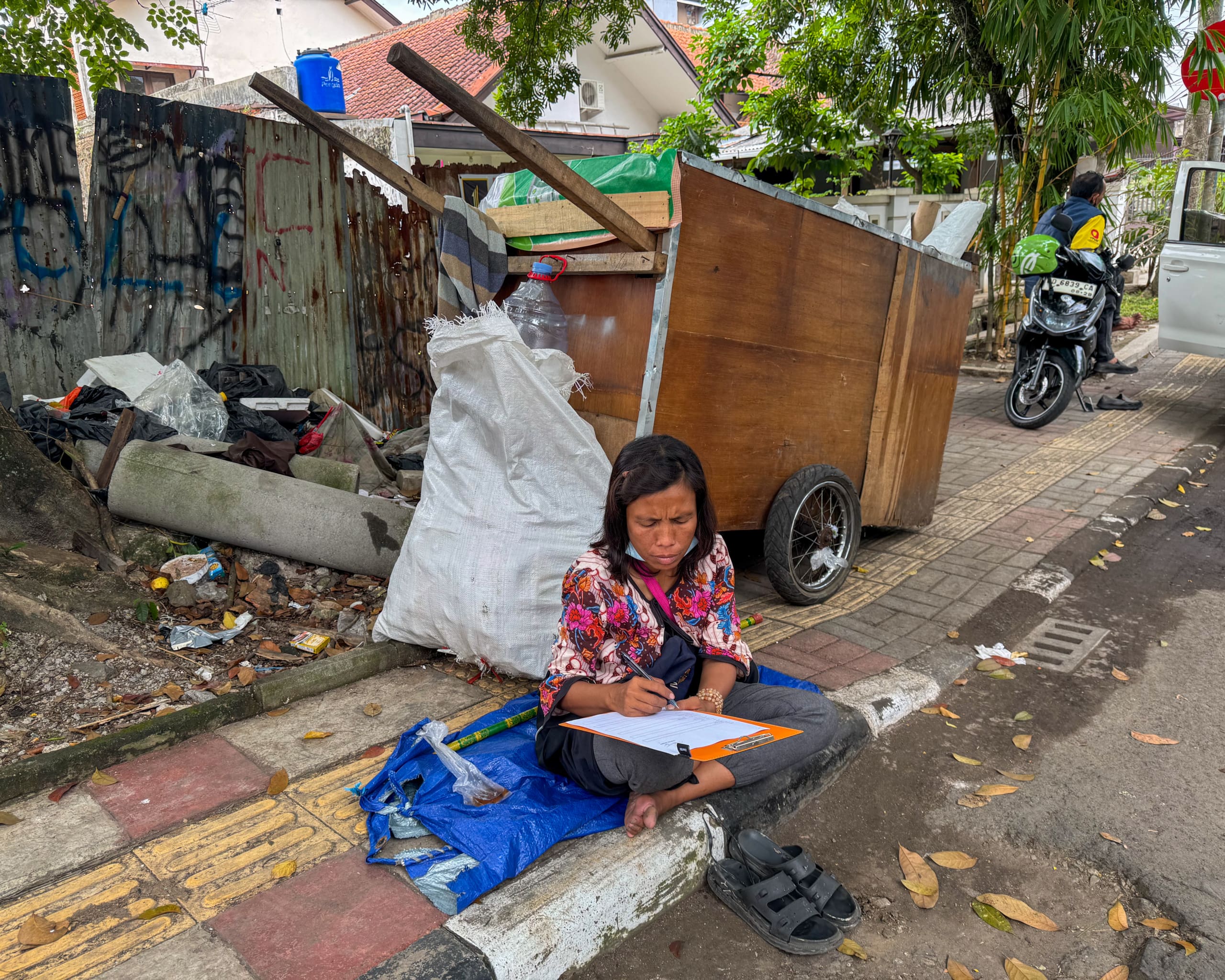
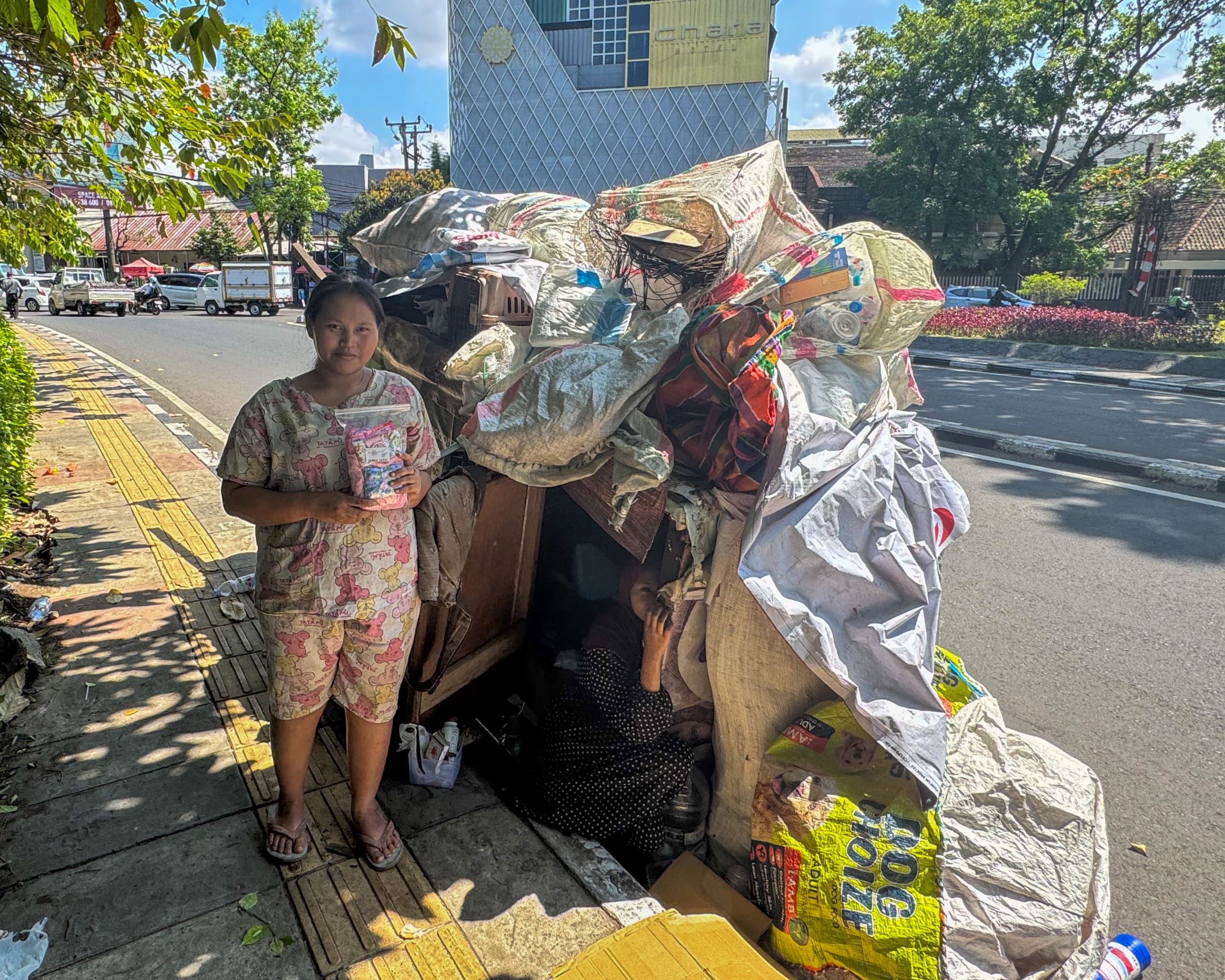
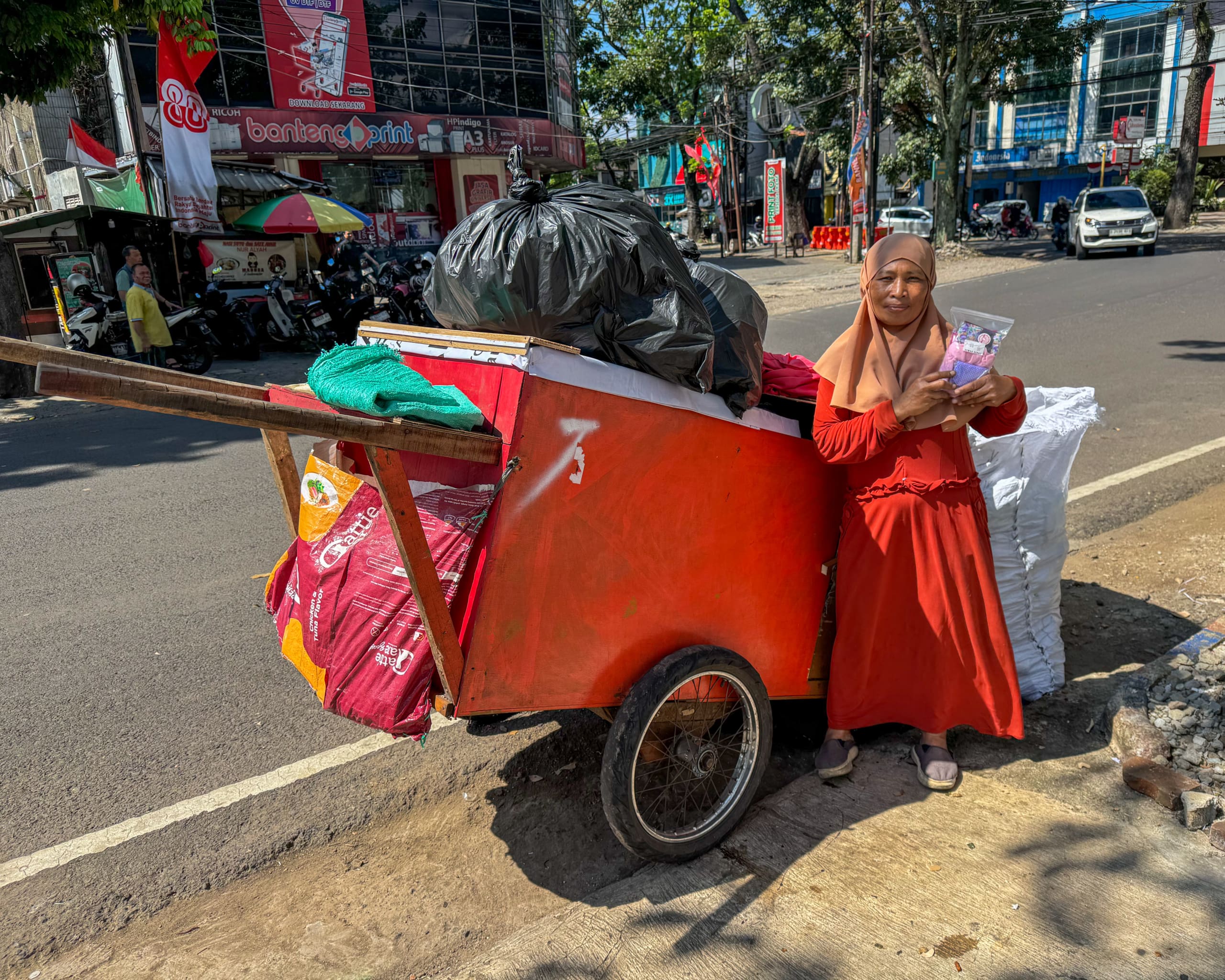
I spoke to 50 Gerobak women in Bandung, Indonesia, as primary research into their sexual and reproductive health. Gerobak women make a living collecting recyclable trash from the streets for a daily meagre income (~£0.42), pushing wooden carts through the city and selling what they collect. Their cart also doubles as their home. Their children sleep there and their belongings are stored there too. There is no separation between work, family and a private life. That matters when we talk about reproductive choice. Choice assumes that there is enough freedom to make one.
When is a pregnancy really a choice?
The research began with a question that had stayed with me since an earlier study in 2022 on period poverty among Gerobak women: how many of their pregnancies had actually been choices? Across the 50 women, 131 pregnancies were reported. Of these, 58 were described as planned and 73 (or 55.7 per cent) as unplanned. But an unplanned pregnancy is an outcome, not an explanation.
Behind that number could be a woman who could not access contraception. It could be a partner who refused to use it. It could be a lack of information about reproductive health. Or it could be a woman who felt unable to refuse sex. The distinction matters because when we describe a pregnancy as ‘unplanned’, we can make the circumstances that produced it disappear.
The responses about sexual pressure made those circumstances harder to ignore. 42 per cent of the women reported moderate to high levels of pressure from their partner to have sex, including eight per cent who experienced constant pressure. When asked how much control they felt they had over decisions about sex, 62 per cent fell within the no-control or low-control categories. Only two per cent reported complete control. These figures raise a more difficult question than whether sex was technically consensual. How meaningful is consent when a woman does not feel that she has much control over the decision?
The violence we do not always recognise
Sexual coercion is often imagined as an obvious act of violence. But coercion can be much quieter. It can be pressure repeated until refusing no longer feels worth the consequences. It can be fear of conflict. It can be the expectation that a partner’s wishes come first. It can be the assumption that sex is something a woman owes within a relationship.
There may be no single moment that a woman identifies as violence. There may simply be a pattern in which saying no becomes increasingly difficult. This is particularly important when sexual pressure intersects with reproductive decisions. 32 per cent of the women said their partners had pressured them to have more children than they wanted. Only 32 per cent said they and their partner had mutually agreed about contraception.
Women are often expected to carry responsibility for contraception, pregnancy and childcare. Yet the decisions behind those responsibilities may not be theirs alone. This is where discussions about violence against women become more complicated. We tend to look for an event that can be reported and has left physical evidence. But coercion can be embedded in the ordinary negotiations of a relationship.
What happens when a woman wants contraception but cannot persuade her partner to use it? What happens when refusing sex means anticipating conflict? What happens when she does not recognise what is happening to her as coercion because nobody around her has ever called it that?
A right is not the same as access
The research suggested that non-consensual sex was often normalised rather than recognised as violence. That matters because recognition is connected to access. If a woman does not have the language to describe what is happening, where does she go for help? If she does not know her reproductive rights, how can she challenge their violation? And if health care exists but is practically unreachable, what does that right mean?
Only 24 per cent of the women in the study had access to contraception before their last pregnancy. Just 32 per cent had ever received formal or informal education about reproductive rights. Knowledge of reproductive law was also incomplete, with many women unaware of the legal framework surrounding abortion.
None of this means that Gerobak women lack agency. In fact, describing women living with poverty and violence only through what they lack can obscure the extent to which they are already making decisions every day. The women I met were working on the dusty roads of Bandung, raising children, negotiating relationships and finding ways to survive in circumstances that offered very little certainty.
But agency does not exist in a vacuum. A woman can have the legal right to seek health care and still be unable to leave work without losing that day’s income. She can want contraception and still be unable to negotiate its use with her partner. She can want to attend a sexual-health programme and still have nobody to look after her children. The last of these became particularly clear when I asked whether the women would attend a local sexual-health education programme. 44 of the 50 said yes.
Then came the question that stayed with me: “Who’s going to watch my kids?” It was a practical question, but it exposed something that a statistic cannot. The women were not saying they did not want information. They were asking whether their lives had enough space for them to receive it.
Who gets to exercise a right?
This is where sexual and reproductive health policy needs to move beyond the existence of services. It is easy to say that contraception is available. It is harder to ask whether a woman can actually obtain it without losing income, leaving her children unattended or facing opposition from her partner.
It is easy to offer a sexual-health programme. It is harder to ask whether the programme has been designed around the lives of the women it is supposed to reach.
For Gerobak women, that could mean bringing sexual-health education directly into the places where women live and work. It could mean providing childcare and operating around working hours. It could mean making information about consent and reproductive rights available repeatedly and in accessible formats, alongside clear routes to health care and support. These are not simply additional services. They determine whether access exists in the first place. The experiences of the 50 Gerobak women expose a gap that is easy to miss when rights are measured by whether a service exists rather than whether a person can realistically use it. A right can exist on paper and still be difficult to exercise.
That distinction matters far beyond the Gerobak community. As the world marks the 16 Days of Activism against Violence Against Women and Girls this November, we should ask not only where violence happens, but what conditions allow it to remain unrecognised and unchallenged, because violence is not always a moment. Sometimes it is pressure. Sometimes it is the absence of alternatives. Sometimes it is a woman calculating what saying no will cost her. And sometimes the question is not whether she has the right to say no. It is whether she is free enough for that not to matter.
Sanandha Prabu is the founder of Semua Sehat, driving youth-led health equity and support for underserved and marginalised communities in Indonesia.
Learn more about the Gerobak community and the work of Semua Sehat at www.semuasehat.com or @semuasehat.indo on Instagram.
Bristol University Press/Policy Press newsletter subscribers receive a 25% discount – sign up here.
Follow Transforming Society so we can let you know when new articles publish.
The views and opinions expressed on this blog site are solely those of the original blog post authors and other contributors. These views and opinions do not necessarily represent those of the Policy Press and/or any/all contributors to this site.
Image credit: Author’s own.