


Poverty, inequality and social justice

Ed Bridges discusses how Andy Burnham's devolution agenda could face a major test if it expands powers within England while resisting greater devolution for Scotland, Wales and Northern Ireland.…Read more

Lee Gregory suggests that the next Labour leader should reject the false choice between welfare and defence by arguing that reducing poverty is an essential investment in national security, economic strength, and long-term prosperity.…Read more
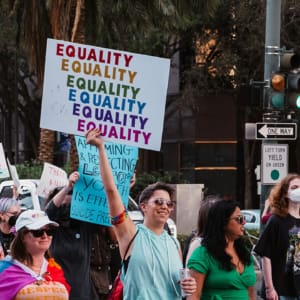
Lee Gregory, Eleanor Formby and Peter Matthews discuss how Scotland's rights-based social security system has improved the experiences of many LGBTQ+ claimants, while persistent discrimination and weakening political support continue to undermine genuine equality.…Read more

Will Snell, author of 'The Fair Necessities', examines how extreme wealth, exemplified by a trillion-dollar fortune, is rapidly widening inequality, with largely unearned and extractive wealth growth that harms economic growth, social mobility, democracy, and the environment.…Read more
Joanna Mack, author of 'Impoverished', argues that tackling poverty in the UK requires bold, long-term reforms that combine fairer incomes, lower costs for essential goods, stronger public services, and a more universal welfare system rather than relying mainly on means-tested benefits.…Read more

The policy briefing highlights that, amid widespread UK food insecurity, food banks provide varied short-term support but lasting solutions require stronger social safety nets and measures that address the root causes of poverty.…Read more

Ahead of the ninth anniversary of Grenfell, Steve Tombs examines how the Grenfell disaster will test whether UK corporate manslaughter law can finally hold large organisations accountable for avoidable deaths, despite a long history of limited prosecutions and systemic barriers to corporate criminal liability.…Read more

Drawing on research for 'Cracking the Class Code', Lee Elliot Major and Anne-Marie Sim argue that success in elite workplaces is shaped not only by talent and hard work but also by hidden class-based cultural norms that influence who is seen as credible, authentic and deserving of advancement.…Read more

The article argues that rising inequality, scapegoating and misinformation are driving social division in the UK, but history shows societies can renew themselves by confronting structural problems rather than blaming vulnerable groups.…Read more

Clare Bambra, Julia Lynch and Katherine Smith, authors of 'Getting Better', argue that declining healthy life expectancy and widening health inequalities in the UK are the result of political and economic choices, such as austerity, weak regulation and inequality, meaning they can be reversed through sustained policy action on welfare, public services and social conditions if there is political will.…Read more