


Poverty, inequality and social justice

Drawing on research for 'Cracking the Class Code', Lee Elliot Major and Anne-Marie Sim argue that success in elite workplaces is shaped not only by talent and hard work but also by hidden class-based cultural norms that influence who is seen as credible, authentic and deserving of advancement.…Read more

The article argues that rising inequality, scapegoating and misinformation are driving social division in the UK, but history shows societies can renew themselves by confronting structural problems rather than blaming vulnerable groups.…Read more

Clare Bambra, Julia Lynch and Katherine Smith, authors of 'Getting Better', argue that declining healthy life expectancy and widening health inequalities in the UK are the result of political and economic choices, such as austerity, weak regulation and inequality, meaning they can be reversed through sustained policy action on welfare, public services and social conditions if there is political will.…Read more

Jade Levell, author of 'Boys, Childhood Domestic Abuse and Gang Involvement', examines child death records to show that knife crime prevention frequently comes too late. Her analysis argues that vulnerable children are repeatedly failed by fragmented systems that miss or overlook early experiences of violence, particularly within the home and at school. #KnifeCrimeAwarenessWeek…Read more
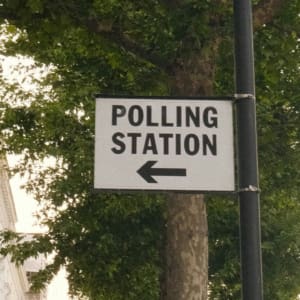
Lee Gregory discusses how the May 2025 local elections showed that despite Labour offering stronger evidence-based anti-poverty policies than Reform UK, voters punished Labour’s cautious and unconvincing leadership while rewarding Reform’s emotionally resonant populist messaging.…Read more

John Hyde, author of 'Indefensible', argues that despite promises of fair compensation, victims of the Post Office scandal have faced a slow, adversarial claims process that prolongs their suffering, largely driven by the organisation’s own approach rather than just its lawyers.…Read more

George Miller discusses the What Is It For? book series, inspired by Gauguin’s existential questions, arguing that in an age of global “polycrisis,” critically examining the purpose of institutions can help us imagine better alternatives, even if it cannot solve problems outright.…Read more

Scott Thomas and Jonathan Glazzard, authors of 'The Queer World of Prison', argue that despite government claims of modest reductions, prison education across England and Wales faces deep cuts—up to 65% in some prisons—threatening rehabilitation, prison safety and efforts to reduce reoffending.…Read more

Natalie Rutter and Sarah Waite, editors of 'Women, Relationships & Criminal Justice', argue that nearly two decades after the Corston Report, progress on reforming the criminalisation of women remains slow, and real change requires shifting the justice system from risk-based punishment to relationship-centred care and structural reform.…Read more

Pushkala Prasad, author of 'Capitalism’s Dark Complexion', argues that capitalism has always been deeply racialised, exploiting Black and Brown bodies, from chattel slavery to modern e-waste labour, while disproportionately enriching White populations.…Read more