


Health and wellbeing

ASAP UK urges Andy Burnham to make tackling poverty a central priority through stronger social security, child-poverty action, decent wages, social housing and treating poverty as a health issue.…Read more

Helen Keane, David Moore and Mats Ekendahl argue that Andy Burnham’s celebration of pubs and moderate drinking highlights a tension between alcohol’s genuine social benefits and the increasingly dominant public-health focus on its harms, which can overlook class and gender inequalities and the value of community and pleasure.…Read more

The policy briefing argues that unpaid carers and their organisations must be central to social care reform. Drawing on the history of the carers’ movement, it shows how carers’ organisations have raised awareness, influenced policy and developed practical solutions in the UK and internationally.…Read more

Graham Box and Kenneth Chambaere, authors of 'Assisted Dying', argue that while reintroducing the previous assisted dying bill may be politically practical, Westminster should instead learn from Jersey’s more consultative and flexible model to create safer, more widely supported legislation.…Read more

Sandra Duffy argues that the EHRC’s new guidance, following the 2025 Supreme Court ruling, effectively excludes trans people from equal participation in public life by restricting access to gendered spaces and forcing segregation, which the author says undermines their rights, dignity, and safety.…Read more
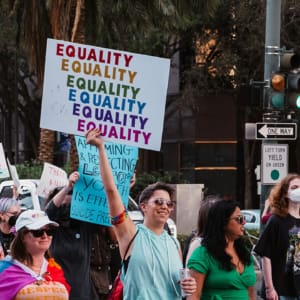
Lee Gregory, Eleanor Formby and Peter Matthews discuss how Scotland's rights-based social security system has improved the experiences of many LGBTQ+ claimants, while persistent discrimination and weakening political support continue to undermine genuine equality.…Read more

Joanna Mack, author of 'Impoverished', argues that tackling poverty in the UK requires bold, long-term reforms that combine fairer incomes, lower costs for essential goods, stronger public services, and a more universal welfare system rather than relying mainly on means-tested benefits.…Read more

The policy briefing highlights that, amid widespread UK food insecurity, food banks provide varied short-term support but lasting solutions require stronger social safety nets and measures that address the root causes of poverty.…Read more

Clare Bambra, Julia Lynch and Katherine Smith, authors of 'Getting Better', argue that declining healthy life expectancy and widening health inequalities in the UK are the result of political and economic choices, such as austerity, weak regulation and inequality, meaning they can be reversed through sustained policy action on welfare, public services and social conditions if there is political will.…Read more

Lee Gregory discusses how the May 2025 local elections showed that despite Labour offering stronger evidence-based anti-poverty policies than Reform UK, voters punished Labour’s cautious and unconvincing leadership while rewarding Reform’s emotionally resonant populist messaging.…Read more