


Democracy, power and governance

Will Snell, author of 'The Fair Necessities', examines how extreme wealth, exemplified by a trillion-dollar fortune, is rapidly widening inequality, with largely unearned and extractive wealth growth that harms economic growth, social mobility, democracy, and the environment.…Read more

Joanna Mack, author of 'Impoverished', argues that tackling poverty in the UK requires bold, long-term reforms that combine fairer incomes, lower costs for essential goods, stronger public services, and a more universal welfare system rather than relying mainly on means-tested benefits.…Read more

Scott Thomas and Jonathan Glazzard, authors of 'The Queer World of Prison', discuss how LGBTQIA+ prisoners face heightened risks of discrimination, isolation, violence, and inadequate support in prison, highlighting the need for systemic reforms, inclusive policies, and better staff training to ensure their safety and wellbeing.…Read more

Ahead of the ninth anniversary of Grenfell, Steve Tombs examines how the Grenfell disaster will test whether UK corporate manslaughter law can finally hold large organisations accountable for avoidable deaths, despite a long history of limited prosecutions and systemic barriers to corporate criminal liability.…Read more

On the eve of what FIFA bills as ‘the greatest show on earth’ – the 2026 World Cup hosted in North America – it’s worth pausing to ask how well it serves the interests of the fans of the planet’s biggest spectator sport.…Read more

The article argues that rising inequality, scapegoating and misinformation are driving social division in the UK, but history shows societies can renew themselves by confronting structural problems rather than blaming vulnerable groups.…Read more

Lee Gregory discusses how the May 2025 local elections showed that despite Labour offering stronger evidence-based anti-poverty policies than Reform UK, voters punished Labour’s cautious and unconvincing leadership while rewarding Reform’s emotionally resonant populist messaging.…Read more

Higher education must take a stand on Gaza and academic freedom: The silence of Swedish universities
These authors argue that universities must actively defend academic freedom and human rights, especially in response to the destruction of Palestinian education, because silence risks complicity and undermines their democratic role.…Read more
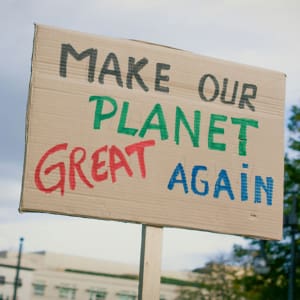
Frank T. Manheim, author of 'American Environmental History and Policy', argues that Trump’s withdrawal from the Paris Agreement reflects a long-building political polarisation over environmental policy in the US, rooted in conflicts in the 1970s, and that future climate progress depends on overcoming this divide.…Read more

Oz Hassan, author of 'Why the European Union Failed in Afghanistan', argues that despite rapid military success using advanced technology, the 2026 Iran strikes demonstrate that destroying targets does not translate into political victory, instead strengthening adversaries, undermining alliances, and exposing the limits of US global power.…Read more