


Justice, law and human rights
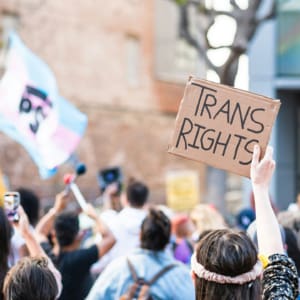
Sandra Duffy argues that the EHRC’s new guidance, following the 2025 Supreme Court ruling, effectively excludes trans people from equal participation in public life by restricting access to gendered spaces and forcing segregation, which the author says undermines their rights, dignity, and safety.…Read more

Scott Thomas and Jonathan Glazzard, authors of 'The Queer World of Prison', discuss how LGBTQIA+ prisoners face heightened risks of discrimination, isolation, violence, and inadequate support in prison, highlighting the need for systemic reforms, inclusive policies, and better staff training to ensure their safety and wellbeing.…Read more

Ahead of the ninth anniversary of Grenfell, Steve Tombs examines how the Grenfell disaster will test whether UK corporate manslaughter law can finally hold large organisations accountable for avoidable deaths, despite a long history of limited prosecutions and systemic barriers to corporate criminal liability.…Read more

Jade Levell, author of 'Boys, Childhood Domestic Abuse and Gang Involvement', examines child death records to show that knife crime prevention frequently comes too late. Her analysis argues that vulnerable children are repeatedly failed by fragmented systems that miss or overlook early experiences of violence, particularly within the home and at school. #KnifeCrimeAwarenessWeek…Read more

Higher education must take a stand on Gaza and academic freedom: The silence of Swedish universities
These authors argue that universities must actively defend academic freedom and human rights, especially in response to the destruction of Palestinian education, because silence risks complicity and undermines their democratic role.…Read more

John Hyde, author of 'Indefensible', argues that despite promises of fair compensation, victims of the Post Office scandal have faced a slow, adversarial claims process that prolongs their suffering, largely driven by the organisation’s own approach rather than just its lawyers.…Read more

George Miller discusses the What Is It For? book series, inspired by Gauguin’s existential questions, arguing that in an age of global “polycrisis,” critically examining the purpose of institutions can help us imagine better alternatives, even if it cannot solve problems outright.…Read more

Emmy Eklundh, author of 'Europe’s Populist Condition', suggests that mainstream European parties are increasingly adopting populist-right policies, showing the divide between “mainstream” and “populist” politics is largely illusory.…Read more

Tara Lai Quinlan, author of 'Police Diversity', discusses how ICE’s aggressive raids in Minneapolis reflect a harmful “warrior” policing culture that damages community trust.…Read more

Scott Thomas and Jonathan Glazzard, authors of 'The Queer World of Prison', argue that despite government claims of modest reductions, prison education across England and Wales faces deep cuts—up to 65% in some prisons—threatening rehabilitation, prison safety and efforts to reduce reoffending.…Read more